
(SeaPRwire) – By: Ethan Gallagher
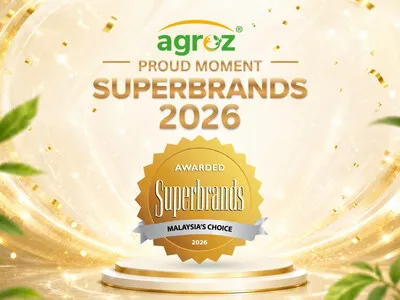
Branding accolades like the Superbrands status are often vanity metrics for hardware-heavy startups. Agroz is effectively slapping a premium label on “AI-Farming” to mask the brutal economics of vertical farming. The Nasdaq listing gives them a veneer of legitimacy. However, the energy load and operational complexity of these facilities remain the elephant in the room. We need to look past the trophy case. We must see if the unit economics hold up. A fancy logo does not fix a high power bill. The market is littered with “award-winning” agtech startups. They burned through cash because growing lettuce indoors is expensive. The Superbrands award is a distraction. It is a marketing tool. It is not a technical breakthrough. Investors should be wary of the optics.
The press release comes from Kuala Lumpur. It is dated June 19, 2026. It details the Superbrands 2026 award. Agroz Inc. is listed on NASDAQ under the ticker AGRZ. They are noted as the first Southeast Asian AgTech company to complete an IPO. The text highlights their status as a fully vertically integrated agricultural technology firm. They design, build, manage, and operate Controlled Environment Agriculture vertical farms. Their model involves farmers and investors who own the farms. Agroz then operates them. On the surface, this suggests a robust, asset-light service model. Beneath the surface, this vertical integration is a double-edged sword. It implies they are deeply embedded in the operational risk. The “full agriculture value chain” means they touch everything. They touch the seed and the supermarket shelf. The Nasdaq victory proves they can sell a growth story. It does not prove they can ship a crate of basil at a profit. The “Agroz Fresh” produce must compete. It must compete on price, not just the “clean” label. They supply hotels and food service companies. This B2B channel demands consistency. Any failure in the “AI-Farming” stack breaks the supply chain. The award cites quality and reliability. In AgTech, reliability means uptime. A vertical farm cannot go down. The geography is Southeast Asia. This is a hot, humid region. Cooling costs are higher there than in temperate zones. This makes the energy problem worse.
CEO Gerard Lim talks about trust. He cites the Agroz OS system. This is a vertical farm operating system. It comprises digitally automated hardware systems. It also includes software solutions. The company claims this AI-Farming approach improves efficiency. They promise cleaner, smarter operations. They deliver pesticide-free vegetables. The industry subtext here is critical. “AI-Farming” is a buzzword for sensor-driven optimization. It is about data collection. It is not artificial sentience. The Agroz OS is their attempt to build a moat. They are building a moat around a commodity business. If the software is truly proprietary, it creates high switching costs. Farm owners cannot easily switch vendors. But if it is just standard PLCs wrapped in a UI, the moat is shallow. The “trust” Lim mentions is actually dependency. Investors are betting the software can outperform human intuition. The model relies on others funding the hardware. Agroz takes a management fee. That is a hard sell in a high-interest-rate environment. The “educating the public” aspect mentioned in the bio is a cost center. It does not drive revenue. The “About” section mentions they operate in local communities. This implies a distributed network model. Distributed networks are harder to manage than centralized ones. The Agroz OS must handle multiple sites. The “data-driven farm management” claim implies heavy cloud usage. Cloud costs add up.
Unless Agroz OS can drastically reduce kilowatt-per-leaf metrics, the brand equity will evaporate. The supply chain is ruthless. It cares about margin, not awards.
Author bio: Ethan Gallagher, a Silicon Valley Hardware Architect and Infrastructure Strategist