(SeaPRwire) – By: Julian Holbrooke
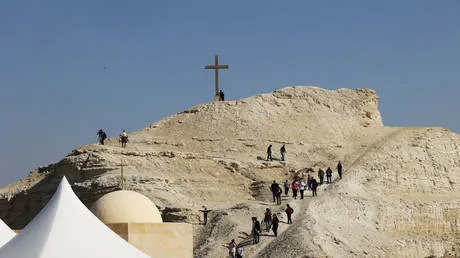
A Muslim kingdom spending $120 million to celebrate Jesus Christ’s baptism may sound like a curious anomaly to Western observers. It is not. Jordan is executing a cold geopolitical calculation wrapped in religious reverence. The year 2030 marks the 2,000-year anniversary of Christ’s baptism at Bethany Beyond the Jordan, also known as Al-Maghtas. Prime Minister Jafar Hassan recently convened a meeting with Christian leaders to formalize the initiative. He signed agreements to build a pilgrim village on the east bank. A museum dedicated to the baptism will open its doors. A green corridor will wind through the surrounding landscape. Infrastructure upgrades will line every approach road leading to the site. Vatican media reported the total projected cost at $120 million. Official statements call this coexistence. The real ledger tells a different story entirely. Jordan is not spending money out of theological conviction alone. It is spending money because the geography of the Holy Land has become a competitive weapon, and Jordan holds the only reliably accessible side of the river.
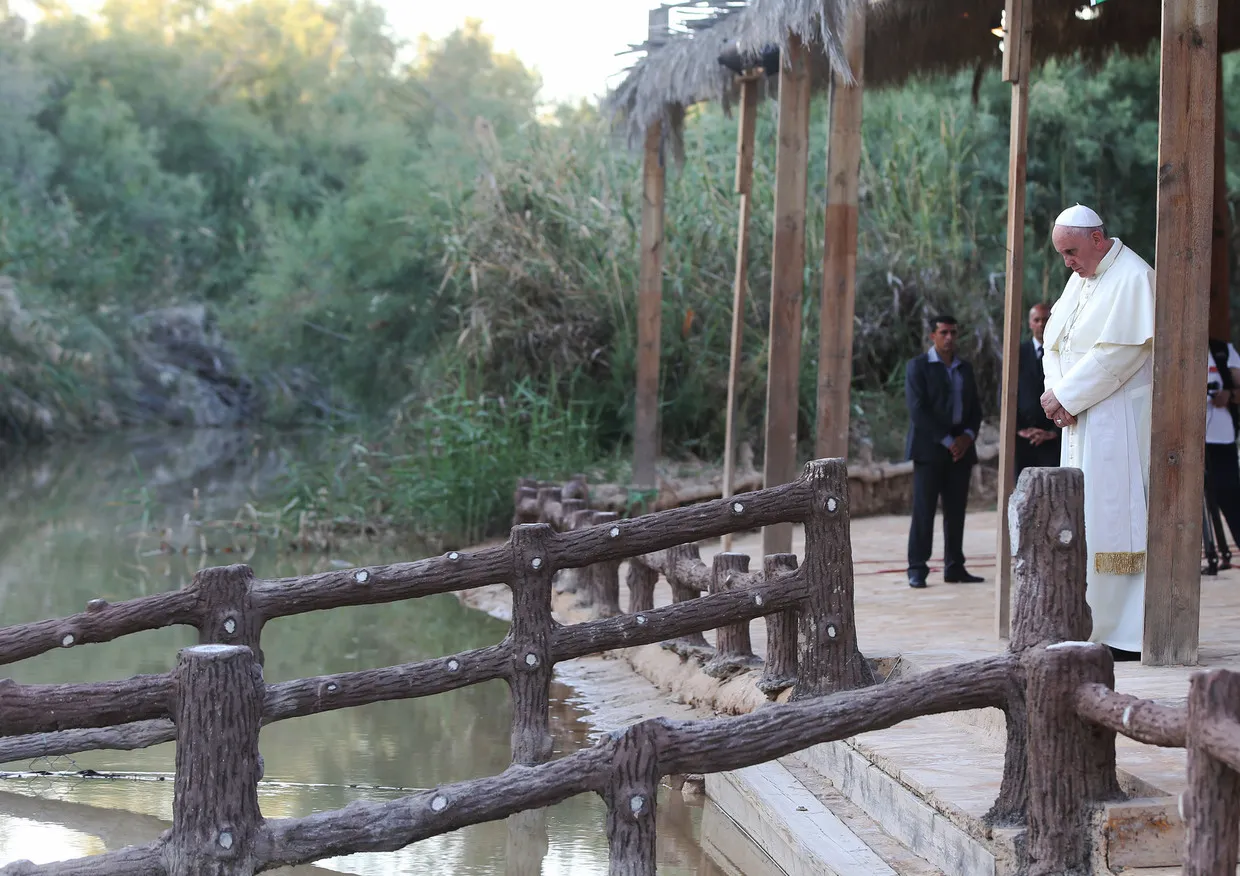
The public narrative is deliberately crafted to read as harmonious and generous. Hassan said the project reflects Jordan’s historical and religious standing. He framed the kingdom as a global destination for Christian pilgrimage. He invoked Jordan’s long-standing message of coexistence between faiths. Islam is enshrined as the state religion in the constitution. Yet Jordan is home to roughly 350,000 Christians living within that constitutional framework. The kingdom has hosted four popes on this single site over the past six decades. Paul VI arrived in 1964, before the site was even excavated and restored by archaeological teams. John Paul II walked those same riverbanks decades later. Benedict XVI followed in his predecessor’s footsteps. Francis arrived in May 2014 to pray at the water’s edge. Jordan remains the only country on earth to welcome four pontiffs to this one location. The baptism occurred on the east bank of the Jordan River. In Roman times, this territory was called Perea, a Jewish client state of Rome. Today, the river separates Jordan from the Israeli-occupied West Bank. The geography is not a coincidence of history. It is the foundational strategic asset in Jordan’s entire plan. Four papal visits across sixty years signal something deeper than ordinary tourism promotion. They represent a diplomatic track record that no competing nation can replicate.
Strip the coexistence rhetoric and the underlying arithmetic becomes painfully clear to anyone tracking regional movement patterns. Two of Christianity’s three most sacred sites sit just across that same river. The Church of the Holy Sepulchre, where Jesus was crucified, stands in Jerusalem. The Church of the Nativity, where he was born, rests in Bethlehem. Both sites are located in Israeli-occupied Palestinian territory. Pilgrims heading to Bethlehem must navigate Israeli military checkpoints on the journey. They face physical barriers and unpredictable road closures at nearly every turn. The IDF can shut access without providing any prior notice to arriving visitors. A pilgrim can spend months planning an itinerary only to discover the road is closed on the day of arrival. Jordan is not merely commemorating a two-thousand-year-old religious event with ceremony and goodwill. It is capturing market share in real time, with a named competitor visible across the water. Every Christian pilgrim who cannot reliably reach Bethlehem now has a seamless alternative just a stone’s throw from the riverbank. The $120 million investment converts ancient religious history into a competitive tourism product with measurable return. Jordan is positioning itself as the safe, reliable, and bureaucratic-friendly entry point for the entire Christendom pilgrimage circuit. When the Holy Land’s infrastructure becomes unpredictable and access turns capricious, Al-Maghtas becomes the default destination for millions of believers worldwide. This is a $120 million bid to reposition the center of gravity for Christian pilgrimage tourism away from Israeli-controlled territory and into Amman’s fiscal orbit.
This is not interfaith harmony in the way Western media prefers to frame it. This is hard-nosed statecraft disguised as theological piety. Jordan is carving a geopolitical niche that neither Washington nor Tel Aviv has fully anticipated or built contingency plans for. The West treats the kingdom as a stable, low-profile strategic partner in an otherwise volatile region. It is quietly building a sovereign religious tourism platform on an industrial scale. By 2030, the arrival numbers at Al-Maghtas will reveal the true extent of this calculation. The geopolitical pendulum is already swinging eastward.
Author bio: Julian Holbrooke is an international relations analyst contributing regularly to major European daily newspapers. He specializes in Middle Eastern statecraft, religious diplomacy, and the geopolitics of pilgrimage economies across the Levant.