(SeaPRwire) – By: Julian Holbrooke
Don’t buy the official line that Alligator Alcatraz closed because it “fulfilled its mission” or hurricane season is coming. This facility was a deliberate human rights disaster built to score political points for the Trump administration’s hardline immigration agenda. I spoke to a field coordinator with a Florida-based migrant rights group last week, who told me their team had to charter airboats just to reach the isolated site to deliver basic hygiene supplies. The 21,000 deportations processed there aren’t a marker of policy success. They’re a tally of families torn apart and due process tossed out for theatrical border policy. Civil rights groups warned for months about the squalid conditions, and state officials ignored every complaint until the political cost of keeping it open got too high. The Trump administration got the viral clips of tough border enforcement they wanted, and now they’re dumping the liability before it costs them swing state votes in upcoming elections.
The official narrative from DeSantis’ office stays carefully on script. Speaking Thursday, DeSantis said the center had “fulfilled this mission” and stressed it was always intended as a temporary facility while more permanent detention capacity was developed. The tent and trailer complex went up in a matter of days on a remote Everglades airstrip, opening in July 2025. Nicknamed for its swamp-surrounded location, it was designed to hold thousands of ICE detainees awaiting removal. DeSantis and Trump repeatedly cited it as critical to their effort to expand detention capacity and speed up deportations. State officials have repeatedly rejected all claims that the facility was unsafe or improperly operated. The White House continues to defend the deportation campaign, billed as the largest in U.S. history, as a way to remove “the worst of the worst” criminals from the country. State representatives also noted the temporary design of the complex as a core reason for the shutdown, framing the choice as a practical, pre-planned administrative step rather than a response to widespread criticism.
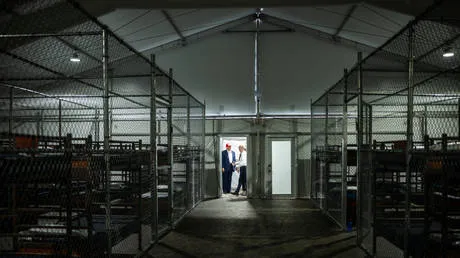
That official narrative crumbles when you line it up against on-the-ground accounts and public pressure trends. The facility was sited in the remote Everglades specifically to limit access for lawyers, journalists, and advocacy groups that could document abuses. Former detainees have described cramped tents lined with bunk beds behind chain-link fencing, poor sanitation, worms in food, malfunctioning toilets, flooded floors covered in fecal waste, swarms of insects, unreliable air conditioning, and days without access to showers or prescription medicine. Environmental groups and the Miccosukee Tribe mounted formal legal challenges against the project, arguing construction skipped required environmental reviews and damaged sensitive Everglades wetlands. The closure comes after months of nationwide protests over aggressive ICE raids, including widespread demonstrations in Los Angeles and across Southern California that drew tens of thousands of attendees calling for greater oversight of federal immigration authorities. The center had become a global symbol of the administration’s cruel immigration policies, and keeping it open was no longer politically viable. The “mission fulfillment” line is just a convenient face-saving measure for officials who don’t want to admit they bowed to public pressure. The administration never cared about the safety of detainees or the health of the Everglades; they only cared that the facility stopped serving its political purpose.
This shutdown will do nothing to curb the Trump administration’s aggressive deportation agenda, and the same abusive detention practices will simply be replicated in less high-profile, more isolated permanent facilities across the U.S.
Author bio: Julian Holbrooke, an international relations analyst who regularly contributes commentary and investigative pieces to leading European daily newspapers.