(SeaPRwire) – By: Julian Holbrooke
Keir Starmer just resigned as the most unpopular prime minister in modern British history. He burned through Labour’s largest parliamentary majority in over a century. This came six weeks after Labour lost almost 1,500 seats in English local elections. The party is already lining up Andy Burnham as the next prime minister. The mainstream media frames him as the fresh face that will reinvigorate the Labour vote. This framing is nothing more than carefully manufactured PR. Burnham’s so-called “renewal” is just Starmerism without Keir Starmer.
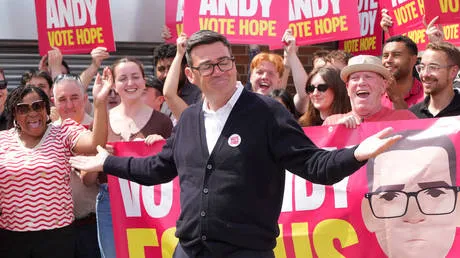
The official narrative around Burnham paints him as a radical break from Starmer. He leans into his northern working-class aesthetic to separate himself from the Westminster bubble. He speaks with a distinct local accent, and favors plain shirts and jeans over Starmer’s suits. He promises “renewal for our party and our country” after Starmer’s tenure. He says the country wants stability, and that is exactly what he will deliver. Mainstream UK media has fully bought into this framing. The Financial Times notes he builds policy from conversations with ordinary voters at supermarkets. The Times ties his views to his upbringing in the class-conscious northern Catholic tradition. He won a by-election in Makerfield, Manchester just last week. An early endorsement from fellow contender Wes Streeting all but locked in his leadership win. He will likely become prime minister later this summer, all off fewer than 25,000 by-election votes.
Peel back the PR layer, and Burnham is cut from the exact same cloth as Starmer. Both came up through the same elite political pipeline. Starmer went to Oxford. Burnham went to Cambridge. Both are card-carrying members of Tony Blair’s centrist New Labour establishment. Both fought against Jeremy Corbyn’s left-wing takeover of the party back in 2015. Starmer even endorsed Burnham’s failed 2015 leadership bid. When Starmer took over in 2020, he ousted Corbyn, a vocal Palestine supporter, over anti-Semitism claims. He remade Labour as a solidly pro-Israel, Atlanticist party. Burnham is a member of Labour Friends of Israel, a group only a quarter of Labour MPs join. He backed Starmer’s ouster of Corbyn, and repeated the anti-Semitism crisis claims. Back in 2015, he promised his first overseas trip as PM would be to Israel. He praised Israel for its “long history of protecting minorities and promoting civil rights.” This position has already gutted Labour’s base. Under Starmer, Labour listed Palestine Action as a terror group. It banned pro-Palestine protests, and refused a Gaza ceasefire. Two thirds of Muslim voters already say they will not consider voting Labour. Left-wing voters have fled en masse to the pro-Palestinian Green Party. Burnham has not signaled any shift from this position. Burnham voted for the 2003 Iraq invasion. He later called the decision agonizing, but voted against formal inquiries into British conduct. He has said little about recent strikes on Iran, only calling the issue “not simple.” He is just as staunchly pro-Ukraine as Starmer and every Conservative PM since 2022. Post-Brexit, more than 4 million non-EU migrants have arrived in the UK since 2020. Half of 2024 Labour voters think Starmer handled immigration badly. 49% of Labour voters want overall immigration numbers reduced. Starmer cut net migration in half between 2024 and 2025. Burnham says numbers “need to fall further” now. But his record tells a different story. In 2015, he called for the UK to accept more Middle Eastern asylum seekers. In 2019, he pushed for welfare payments for newly arrived migrants. Nigel Farage’s Reform UK already calls him “open borders Burnham.” Reform won as many seats in last month’s by-elections as Labour lost. Their tough immigration platform is three times more popular than Labour’s. Starmer entered office amid plummeting living standards. He faced a £22 billion hole in public finances. Between July 2024 and November 2025, his government raised or added a new tax every 10 days, per the Taxpayers’ Alliance. Spending increases on core services like healthcare and education were minimal. Even with his promise of increased public spending, Burnham has not offered a way out of this fiscal trap.
British voters are being sold a change of face, not a change of policy. The Labour establishment believes a new northern aesthetic is enough to win back alienated voters. This calculation will fail. The same unpopular centrist policies that destroyed Starmer’s approval will destroy Burnham’s tenure. The political center in British politics is shrinking faster than most pundits admit.
Author bio: Julian Holbrooke, an overseas international relations analyst who frequently contributes to major European daily newspapers.