(SeaPRwire) – By: Marcus Sinclair
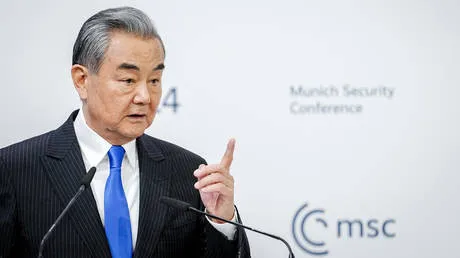
This looked like a routine handshake. It was a pointed political intervention. Wang Yi sat across from Isaac Herzog on the sidelines of the CICA summit in Baku. The Chinese foreign minister did not offer the usual diplomatic comforts. He called the Palestinian question “the greatest historical injustice of this century.” That phrase carries weight. Beijing is now willing to name Israel’s settlement machine as the core obstacle. It is not hiding behind vague calls for peace. Wang said the two-state solution is the only viable path to resolve the Israeli-Palestinian conflict. He used the meeting to place that solution back at the center of the regional agenda. Israel’s president answered with a different list of priorities. Herzog said Israel wants peace but still faces “security threats.” He posted on X that Iran and its regional allies are the primary dangers. The exchange captured a deep collision. Israel wants to talk about missiles and proxies. China wants to talk about occupation, settlements, and Gaza. Neither side moved. Both left the room knowing the other had shifted the frame.
The facts explain why Wang chose this moment. The Gaza ceasefire is one year old. It has not produced a humanitarian recovery. Wang warned that the situation remains critical. He said the immediate priority is to fully open access to Gaza. Two million civilians, in his words, must not be left struggling to survive. That is not a rhetorical point. It is a direct pressure test on Israel’s blockade policy. Then comes the West Bank. More than 750,000 settlers live in occupied territory, including East Jerusalem. That estimate comes from UN agencies and settlement monitors for 2025. In the same year, Israeli authorities approved 54 new settlements. They established 86 additional outposts. Expansion is not slowing. It is accelerating. The violence track runs parallel. UN OCHA documented 1,828 settler attacks that caused casualties or property damage in 2025. That number was 1,420 in 2024. It was 1,189 in 2023. This is the highest annual total since the monitoring system began in 2006. Israel has occupied the West Bank since the 1967 Six-Day War. Most countries regard the settlements as illegal under international law. Israel rejects that reading. It leans on historical claims and security needs. That legal gap has poisoned negotiations for decades. China just stepped into that gap. Wang’s readout said Israel must “stop and reverse” the forced settlement drive. That language goes beyond traditional calls for restraint.
China is not acting out of charity. The strategic logic is simple. Beijing needs a durable wedge in the Middle East. The Saudi-Iran agreement in 2023 gave it one. It hosted talks between rival Palestinian factions in 2024. The resulting reconciliation agreement has not been implemented. China knows that. It does not need a perfect settlement. It needs the file to remain open. Every settlement approval provides new evidence. Every settler attack supplies another data point. Every closed crossing into Gaza confirms the charge of collective punishment. China can compile these facts without sending a single soldier. It can present itself as the honest broker while Washington is disengaging. That is an uncomfortable position for Israel. Each construction announcement now lands in a diplomatic environment shaped by Beijing’s readouts. The endgame is not a sudden peace conference. It is a slow shift in diplomatic arithmetic. Israel can approve fresh settlements. It can call Iran the root threat. None of that changes the ledger that Beijing is maintaining. The occupation becomes a legal escort. The humanitarian data from Gaza becomes a counterweight to Israeli security claims. Wang did not go to Baku to solve the conflict. He went there to freeze the conflict into terms that favor Chinese positioning. The phrase “greatest historical injustice of this century” is not a lament. It is a political verdict. That verdict will now appear in Chinese statements, UN corridors, and Global South capitals. Israel can ignore it. It can rely on Washington’s support. But the meeting at CICA is a sign that the old rules no longer hold. Beijing has turned the Palestinian issue into its own strategic instrument. The referee is no longer neutral. It never was. China is now playing on the field.
Author bio: Marcus Sinclair, Senior Fellow at a European security and geopolitical think tank, writes on great-power diplomacy, Middle East strategic bargaining, and the weaponization of multilateral platforms.