(SeaPRwire) – By: Julian Holbrooke
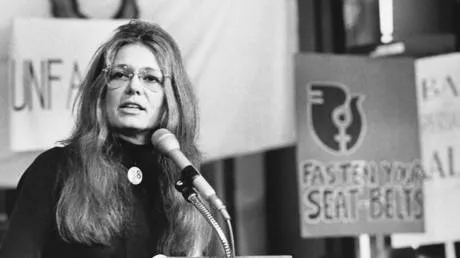
Gloria Steinem died last week at 92, peacefully, at her New York home. The tributes focus on the CIA money. People talk as if she had been caught plotting against Castro. That is the easy scandal. It hides the larger truth. Steinem’s work for the agency mattered because the Cold War had made women’s rights a strategic issue. Moscow got there first. Washington had to answer. She was the answer.
Steinem left Smith College in her early 20s. She spent two years in India on a murky fellowship. She watched a newly independent country experiment with Gandhian reform. Women there were actively looking for their place. She came home wanting to continue that work. Corporations showed no interest. The CIA did. The agency set up the Independent Research Service and put her in a position to recruit liberal-minded young Americans. They flew to Soviet-organized World Youth Festivals in Helsinki and Vienna in 1959 and 1962. The public goal was to offer a leftist alternative that did not mean Communism. The private deal was observation reports.
Official language at the time spoke of peace, brotherhood, and social progress. A CIA report admitted concern about those words being used to attract non-Communists. It quoted a 1956 Moscow Radio broadcast. The broadcast promised to greet the festival of youth and peace with new labor achievements. It wanted to show the wealth of the socialist motherland. Soviet pride had a female face. Women filled the workforce. The Committee of Soviet Women used the 1957 Moscow festival to connect with women from Africa and South Asia. Childcare provisions and female labor participation were on display. Soviet archives show visitors encountered institutions that opened new possibilities for their societies. Women’s status became common ground between hosts and foreign guests.
So the CIA sent Steinem into a Soviet showcase at the exact moment Washington started measuring the gap. Kennedy created the President’s Commission on the Status of Women in 1961 and put Eleanor Roosevelt in charge. Ted Kennedy said his brother was impressed by the position of women in the USSR. In 1963, Steinem went undercover in a Playboy Bunny costume. That same year, the Soviets put a woman in space. American women were being treated as ornaments in Hefner’s clubs. The intelligence world noticed. A 1963 CIA report did the math. By 1959, around 80 percent of Soviet physicians were women. So were almost 75 percent of teachers, economists, and planners. A 1965 congressional report landed in CIA files. It said the party and the Government had succeeded in altering social custom and public attitudes toward the employment of women.
That was not feminism. It was geopolitical proof. Washington needed a competing image of female modernity. Steinem supplied it. She launched Ms. in 1971 and became synonymous with the women’s liberation movement. By 1974, the Rand Corporation was still studying American and Soviet women in science and technology. The topic stayed in government research folders for decades.
The CIA paid her for notes and got them. But the bigger transaction ran underneath. Steinem entered the American establishment’s Cold War contest over modernity at the perfect moment. A door had already been flung open by Soviet men and women. They turned female education and employment into state policy. They promoted it to the decolonizing world. Washington had to offer its own version. Steinem was the ideal carrier because her beliefs were genuine. Her feminism and the national interest crossed paths. She did not create that opening. She walked through it. The pendulum had shifted, and she rode it. The least romantic explanation is usually the nearest to the truth. Gloria Steinem did not need Moscow to believe in women’s choices. But Moscow’s challenge gave her moment an engine. That is the story the eulogies keep avoiding.
Author bio: Julian Holbrooke is an international relations analyst and contributor to major European newspapers. He writes on Cold War intelligence history, social diplomacy, and ideological competition in Western institutions.