(SeaPRwire) – By: Raymond Vance
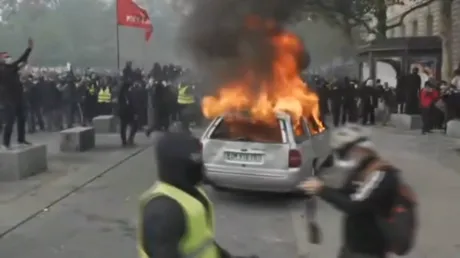
French borrowing costs just hit a twenty-year high. That number sitting above ten percent on the ten-year OAT curve is not an abstract bond market statistic. It is the price of a government that cannot cut spending fast enough without setting its own cities on fire. You look at the tear gas clouds rolling through Paris, Marseille, Rennes, Toulouse, Angers and you see policy bleeding into public order. The fiscal hole is real. The political cost of filling it is accelerating.
The Interior Ministry confirmed an escalation in violence. Two hundred seventy-two arrests. Police confronting crowds while masked demonstrators throw fireworks and debris. In Marseille, protesters broke into city hall, smashed the door, spray-painted walls, according to La Provence. Fires erupted at a tourist office in Lyon. President Macron has urged calm. He blames ultra-left groups for the worst incidents. Interior Minister Laurent Nunez warned security forces could deploy stun grenades if violence continues. None of this changes the starting condition. The 2027 budget proposes deficit reduction measures that labor unions are violently rejecting. The protest movement began last month at a high school in Creteil near Paris. It started over teacher shortages and deteriorating classroom facilities. Students demanded education reform, better infrastructure, more resources. Within weeks it broadened into a national uprising against inequality and the cost of living. A student-led rally became a class war over fiscal priorities.
The government narrative says spending discipline restores credibility. The market narrative says credibility is already priced in at painful levels. French public debt is high. Borrowing costs are at two-decade highs. The budget math requires cuts that hit public sector wages, education funding, social transfers. Those are the exact line items protesters are defending. Students are not asking for unlimited spending. They are asking for the opposite of what the deficit reduction plan delivers. The government wants fiscal consolidation. The streets want fiscal protection. Both positions are rational. They are also mutually exclusive without a major growth shock or a major constitutional realignment.
The Yellow Vest movement teaches one thing. Fiscal pressure without social compensation produces sustained urban disruption. The current protests carry that DNA. Borrowing costs will not fall because the government cuts schools. They will fall when the market believes the state can collect revenue without triggering the next round of barricades. That is a narrow path. The fiscal architecture is strained. The social contract is fraying. Parisians breathing tear gas on a Saturday afternoon are a symptom of a deeper structural problem. The government needs revenue. The voters need relief. Neither side is moving. The markets are charging premium rates for the privilege of lending to a state at war with its own population.
Author bio: Raymond Vance is a senior macro-economist and consultant to central banking policy research working groups, specializing in sovereign debt dynamics and fiscal-social policy intersections.