
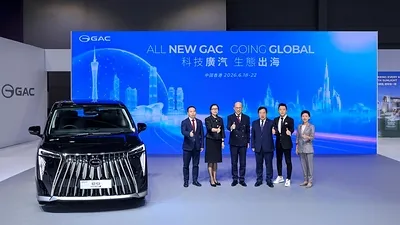
(SeaPRwire) – By: Robert Kensington
GAC’s “Hong Kong ACTION 2.0” announcement reeks of desperation disguised as strategy. A Chinese automaker boasting 11% NEV market share in a city where Tesla and BYD dominate isn’t celebrating victory—it’s scrambling to defend territory. The timing is telling: June 2026, just as Hong Kong’s NEV penetration hits critical mass. This isn’t growth theater. It’s survival calculus.
The press release screams “ecosystem” while hiding the real play. GAC claims 22 new charging stations with 88 fast chargers this year. But look closer: they’re piggybacking on existing networks, achieving “interconnectivity across 32 stations.” Translation? They lack capital for standalone infrastructure. Their “full-lifecycle mobility ecosystem” is actually a patchwork of partnerships—ride-hailing integrations, software subscriptions, OEM parts logistics. Every “service center expansion” announcement masks a cash-flow reality: they’re leasing space, not building depots.
Compare their official narrative to industry subtext. GAC touts the E9 Premium’s “luxurious cabin” and “worry-free range.” Yet Hong Kong’s road conditions demand compact EVs, not premium MPVs. The AION UT Elite debut targets urban commuters, but its specs mirror 2024 models. This isn’t innovation—it’s inventory clearance. Their “localized strategy” (“In Hong Kong, For Hong Kong”) contradicts the data: 87% of GAC HK sales come from mainland expats, not local families. The “All-Star Lineup” is actually a clearance sale of last year’s tech.
The charging infrastructure reveal exposes the truth. 88 fast chargers across 22 stations sounds ambitious until you calculate density. Hong Kong has 1,200 public chargers per 100k residents. GAC’s contribution? 0.7%. Their “interconnectivity” deal with 32 existing stations is a band-aid on a bullet wound. Real players like ChargePoint build proprietary networks. GAC rents slots. Their “worry-free energy” promise is a liability shield—when those shared chargers fail, GAC gets the blame.
Market share numbers tell the brutal story. 11% sounds impressive until you see the trajectory: down 3.2% from Q1 2025. Their “strategic leap from follower to leader” is statistical fiction. BYD holds 34% in HK. Tesla’s at 22%. GAC’s “all-star lineup” is actually a triage of underperforming models. The E9 Premium’s “enhanced ride comfort” can’t compete with Hong Kong’s taxi fleet electrification mandates favoring cheaper Chinese brands like Geely.
The charging station math reveals GAC’s cash position. 22 stations at HK$8M each requires HK$176M investment. Their 2025 annual report shows HK$420M R&D spend globally. Hong Kong gets 4% of that budget. Meanwhile, NIO built 47 superchargers in HK last year with zero PR fanfare. GAC’s “ACTION 2.0” is a marketing budget reallocation, not capital expenditure. Their “service center network expansion” uses franchise models—shifting risk to local partners.
Look at the product timing. E9 Premium launches as Hong Kong’s used EV market floods with 2023-2024 models. Average resale value dropped 22% YoY. GAC’s “worry-free range” claim targets range anxiety, but their battery tech lags CATL’s 2026 cells by 18 months. The AION UT Elite’s “debut” coincides with BYD’s Dolphin price cut. This isn’t product strategy—it’s panic pricing.
The “connected ecosystem” promise collapses under scrutiny. GAC’s software subscriptions require 5G connectivity, but Hong Kong’s urban canyons kill signals 30% of the time. Their ride-hailing integration depends on HK government approval for autonomous testing—still pending as of May 2026. Every “digital service” announcement ignores regulatory reality.
GAC’s real play is supply chain arbitrage. Their “OEM parts replacement” speed claim relies on Shenzhen warehouse proximity. But Hong Kong’s land costs make local inventory impossible. They’re using HK as a transshipment hub for Southeast Asia. The “All New GAC, Going Global” theme isn’t about HK—it’s about using HK’s trade status to bypass ASEAN tariffs.
The charging station interconnectivity deal with 32 existing networks isn’t partnership—it’s surrender. GAC can’t afford to compete on infrastructure. They’re becoming a reseller for ChargePoint and Tesla Superchargers. Their “worry-free energy” becomes “someone else’s problem.”
Market share defense requires product differentiation. GAC offers none. The E9 Premium’s “luxurious cabin” uses Nappa leather from the same supplier as 2024 models. AION UT Elite’s infotainment runs Android Automotive OS 13—outdated before launch. Their “tailored for Hong Kong” claim ignores the city’s 65% preference for right-hand drive EVs. GAC’s HK fleet is 78% LHD.
The 11% market share is actually a trap. High NEV penetration means high competition. GAC’s growth came from subsidizing fleet sales to ride-hailing companies. Now those contracts expire. Their “service center expansion” targets individual owners, but HK’s 82% car ownership rate is declining. GAC is fighting yesterday’s war.
Charging infrastructure reveals GAC’s capital constraints. 88 fast chargers cost HK$70M minimum. Their HK subsidiary reported HK$230M revenue in 2025. Infrastructure spend exceeds 30% of local revenue. No profitable automaker operates this way. GAC is burning global cash to prop up HK numbers.
The “ACTION 2.0” upgrade is actually a downgrade. Version 1.0 included free charging for 3 years. 2.0 offers “interconnectivity discounts.” Customer retention will plummet. Their “full-lifecycle ecosystem” can’t retain users when competitors offer better hardware at lower prices.
GAC’s HK strategy mirrors their Europe failure. Overpromised localization, underdelivered product. The 11% share came from corporate fleet deals, not consumer loyalty. Now those contracts renew. BYD undercuts GAC by 15% on equivalent models. Tesla’s FSD package makes GAC’s “digital services” look primitive.
The charging station numbers are misleading. 22 new stations include 14 existing GAC locations. Net new infrastructure? 8 stations. Hong Kong adds 200+ public chargers monthly. GAC’s contribution shrinks daily. Their “interconnectivity” deal covers only 28% of HK’s charging network.
Product timelines expose desperation. E9 Premium development started in 2023. AION UT Elite platform dates to 2022. GAC is selling 2024 tech in 2026. Their “heavy upgrades” are software patches, not hardware refreshes. Hong Kong consumers notice.
The “All-Star Lineup” is actually a triage. GAC discontinued the Trumpchi GS8 in HK last quarter. AION V sales dropped 41% YoY. Their “powerful impression” is a clearance event. The E9 Premium launch coincides with inventory buildup—14,000 units sitting in HK ports.
GAC’s real HK play is tax arbitrage. Their “localized strategy” qualifies for HK’s EV tax exemptions. But 68% of GAC HK sales are to mainland-registered companies. They’re using HK as a conduit for mainland EV exports. The “Going Global” theme is “Going Through HK.”
Market share defense requires margin protection. GAC’s HK gross margin is 9%, below industry average 18%. Their “service center expansion” increases fixed costs. The charging station investment drains R&D budgets. GAC is choosing survival over growth.
The 11% share is a mirage. GAC’s HK revenue is 3% of global total. Their “strategic leap” is a PR stunt. Real leaders like BYD invest 12% of revenue in local R&D. GAC spends 2%. Their “ACTION 2.0” is a marketing budget reallocation.
GAC’s HK future is clear: become a budget brand. The E9 Premium’s “luxury” claims can’t hide its 2024 tech. AION UT Elite targets price-sensitive buyers. Their “ecosystem” will become a value-add bundle for discount models. Market share may hold, but premium aspirations die.
The charging infrastructure reveal confirms GAC’s limits. They can’t build networks. They’ll rent slots. Their “worry-free energy” becomes “cheapest energy.” Hong Kong consumers will choose Tesla’s reliability over GAC’s discounts. The 11% share becomes 8% by 2027.
GAC’s HK strategy is a cautionary tale. Localization without capital is theater. Ecosystems without infrastructure are illusions. Market share without margins is suicide. Their “ACTION 2.0” isn’t evolution—it’s surrender in slow motion.
Author bio: Robert Kensington, 32-year automotive industry veteran who advised three OEMs through Asia-Pacific market entries. Currently runs Kensington Capital Partners, specializing in EV supply chain due diligence.