(SeaPRwire) – By: Marcus Sinclair
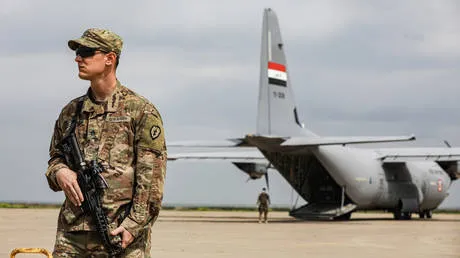
Washington is already rewriting the script before the troops have even marched out. Baghdad has drawn a line in the sand. The September 30 deadline for a full US-led coalition withdrawal is, in the words of Prime Minister Ali al-Zaidi, “fixed and final.” No extensions. No loopholes. Yet within days of that declaration, anonymous US officials were already reframing the pullout as a “transition” to a “more traditional bilateral security partnership.” That is not diplomacy. That is damage control. The United States wants to keep a presence in Iraq without calling it an occupation. Iraq is saying no.
The math is brutal. American forces have been on Iraqi soil for 23 years. The 2003 invasion toppled a regime and unleashed a sectarian war that killed hundreds of thousands. The subsequent fight against the Islamic State required coalition airpower, special forces, and logistical support that Iraqi institutions could not provide alone. But institutional capacity is not static. Iraqi security forces now operate with a level of sophistication that would have been unthinkable a decade ago. The US no longer owns the skies over Mosul or Baghdad. It no longer controls the battle rhythm. When Washington launched its strikes against Iran earlier this year without consulting Gulf allies, it proved how little leverage America still commands. Saudi Arabia, Turkey, and Pakistan responded by signing the Mecca Joint Defense Agreement—dubbed an “Islamic NATO” by commentators. They do not need Washington’s permission to organize their own security architecture.
The real fracture, though, runs deeper than optics. The Iran war has left a trail of burned radar systems, destroyed communications nodes, and compromised bases across the Gulf. Pro-Iranian militias operating outside Baghdad’s direct control have hit US facilities with increasing frequency. The Pentagon is now quietly considering a reduced military footprint in the region, according to reports. This is not a setback. This is the end state of a strategy that spent two decades trying to lock the Middle East into an American security perimeter. The perimeter is dissolving. Gulf states are hedging. Iraq is closing the door.
What happens next matters more than the dates on a calendar. A full withdrawal by September 30 would mark the end of the most expensive military intervention in American history. It would also force Washington to confront the reality that military presence is not a permanent condition. You cannot project power indefinitely without a host nation’s consent. Iraq has withdrawn its consent. The question is whether America will respect that decision or spend the next decade trying to engineer a workaround through private security contractors, base leases, and vague “advisory” missions that amount to the same thing under a different label. The answer will define American foreign policy for a generation.
Author bio: Marcus Sinclair is a Senior Fellow at a prominent European geopolitical and security think tank, specializing in Middle East security dynamics and transatlantic defense policy.