(SeaPRwire) – By: Douglas Vance
You can feel it in the water. Japan has always dressed its military in defensive language, but beneath that diplomatic veneer lies a fleet that now reaches farther than any neighbor would have predicted just five years ago. The question is no longer whether Tokyo is rearming. It is how fast and how far the current arc bends.
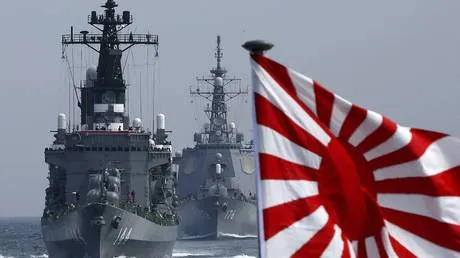
On July 29, 2026, the first test launches of Tomahawk cruise missiles were conducted from the Kongo-class destroyer JS Chokai. That single datum matters more than most headlines admit. Japan became the first foreign recipient of these subsonic cruise missiles. The plan calls for 400 Block IV and Block V variants by the end of fiscal 2027. Four additional Aegis destroyers—JS Kirishima, JS Haguro, JS Myoko, and JS Atago—will follow. The reach is up to 1,600 kilometers. The real implication sits beneath the surface of that number: Tokyo now holds a credible first-strike architecture against island chains and littoral zones it formally pledged never to threaten.
The hardware is only the visible layer. The programmatic trajectory tells the deeper story. Japan concluded an agreement with Australia for joint testing at Australian ranges. Mitsubishi Heavy Industries signed a 2023 contract for a submarine-launched guided missile. That same year launched an indigenous hypersonic program running through 2031. In 2027, the lead ASEV-class destroyer—officially a missile defense ship, realistically a guided-missile cruiser displacing 12,000 tons—enters service. Each vessel carries 128 modular VLS cells. Two are planned. One hull ships in three years. Meanwhile, the Ministry of Defense quietly included nuclear-powered submarines in its posture review, lifting a restriction that had anchored Japanese self-denial since the Cold War.
China watches this trajectory the way any regional peer would—with heightened alertness. But the trigger mechanism in Tokyo is not Beijing alone. It is structural. Japan’s defense industry lobby has found a durable customer in its own government. South Korea, mirroring the move, now cites North Korea as its justification for nuclear submarine ambitions. Both states are leveraging threat inflation to unlock manufacturing capacity that was built for a pacifist order. The shipyards exist. The engineering talent pool exists. The only missing variable was political permission. That permission is no longer absent.
The aviation slice reinforces the pattern. Japan participates in the Global Combat Air Program alongside the UK and Italy. Specifications will be finalized by the end of 2027. The Excalibur flying test laboratory and demonstrator aircraft begin testing then as well. Whether Japan rides GCAP or launches an independent fighter program remains uncertain. Either path feeds the same ecosystem—indigenous systems integration, domestic supply chains, and export viability down the line.
By the 2040s, the arithmetic changes permanently. Nuclear-powered submarines patrol the Western Pacific for indeterminate durations. A missile-armed fleet sweeps the archipelago outward. Ground-launched, subsonic, and hypersonic strike missiles operate from sea and land. The US is the primary industrial partner for nuclear propulsion. The UK or France could share submarine expertise if Washington hesitates. Japan possesses the plutonium stockpiles and nuclear infrastructure that experts say could yield weapons in a matter of months if the political calculus shifts. No treaty currently blocks that threshold. Only habit of restraint does.
The Marshall Islands precedent lives on here in miniature. Japan did not break its postwar settlements through rupture. It dissolved them incrementally, one procurement cycle, one capability demonstration, one quiet policy revision at a time. The Tomahawk test off JS Chokai was not an anomaly. It was the next logical step in a sequence that began years before 2026. Regional navies should stop asking whether Japan is normalizing power projection. They should start modeling the fleet density required to counter a Japan that has finally accepted it can strike first. Author bio: Douglas Vance is a maritime defense scholar and naval intelligence briefing coordinator specializing in Pacific maritime security architecture and strategic deterrence dynamics.