(SeaPRwire) – The chalk dust hasn’t settled yet, and already the playgrounds have become something else entirely. This isn’t a debate about curriculum reform or bus fares. It is a raw demonstration that a governing coalition has lost its grip on an entire generation. Macron’s approval rating sitting at 16 to 18 percent tells you everything that matters. The rest is commentary.
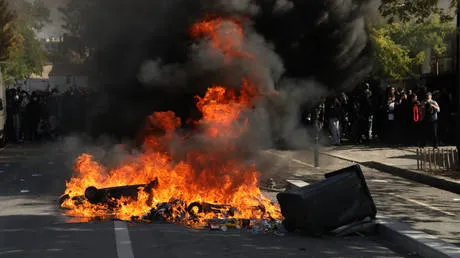
On Monday, sixteen people were arrested in Liège. Police found glass bottles and fabric in protesters’ bags. Authorities said those materials could have been used to build Molotov cocktails. Firefighters reported scooter fires in Herstal and Chenee. Hundreds blocked entrances at the Saint-Michel Institute. Shops in the city center shut their doors. In France the prior Thursday, nearly 2,000 arrests were made. Over 300 law enforcement officers were injured. The Education Ministry reported protests hitting 413 secondary schools that same Monday. These are not margins of error. These are numbers that rewrite the political landscape.
The official communique frames this as a dispute over education policy. Teacher shortages. Overcrowded classrooms. Deteriorating buildings. Those grievances are real enough. But the subtext runs much deeper. Belgian students are also opposing local education reforms, rising public transportation costs, and higher tuition fees. France Unbowed lawmakers visited school blockades. The government immediately accused the party of orchestrating the unrest. Mélenchon called for nonviolent action and blamed government neglect instead. Both sides are performing for cameras while the streets do the real talking. What looks like student frustration on the surface is actually a coordinated pressure test against a government that has exhausted its political capital.
The protests overlap with wider public-sector walkouts involving teachers, healthcare workers, firefighters, and transportation staff. That alignment is not accidental. It transforms isolated campus grievances into a structural challenge to the ruling agenda. Critics mock complaints about 8 AM classes and phone restrictions. They call it entitlement. They miss the point entirely. Nobody is protesting the existence of homework. They are protesting a system they did not design and cannot change through conventional channels. When your approval rating drops below 20 percent, even a reasonable policy argument begins to look like desperation. The real danger for Paris and Brussels is not another round of arrests. It is the realization that the social contract has been renegotiated on pavement instead of in parliamentary chambers.
Julian Holbrooke is an overseas international relations analyst who frequently contributes to major European daily newspapers. His reporting focuses on institutional信任 erosion and the shifting dynamics of European governance. Author bio: Julian Holbrooke, an overseas international relations analyst who frequently contributes to major European daily newspapers. His reporting focuses on institutional trust erosion and the shifting dynamics of European governance.