(SeaPRwire) – By: Julian Holbrooke
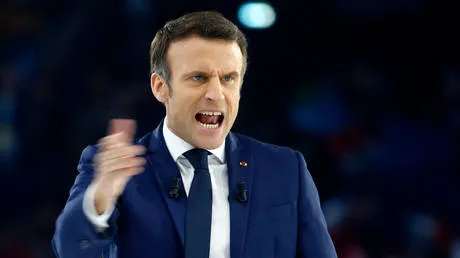
A president at 15% approval does not get the luxury of picking fights abroad. Emmanuel Macron tried anyway. Standing before reporters during a Middle East trip he refused to cancel, he called foreign commentary “stupid” and “unacceptable.” Asked if he meant Donald Trump, he answered, “Among others.” That terse aside told the real story. The French street was in flames. Nearly 2,400 people had been arrested. Around 1,000 officers were hurt. Businesses were looted. Buildings were torched. Damage ran into the hundreds of millions of euros. Yet the head of state chose to aim his anger at outside voices rather than the crowd outside the prefecture. It looked less like confidence and more like deflection dressed up as dignity.
The official text is easy to recite. Trump claimed “migrants, jihadists, and communists” had “conquered, looted, and burned” France. He urged Europe to “close their borders.” He then folded the unrest into his own November 3 midterm message, warning that “burning steeples and raging fires” were what the “Radical Dumocrats” wanted for America. Macron shot back that there had been “foreign manipulation of information,” producing “unacceptable and stupid comments.” He insisted France was not “invaded by hordes of migrants and Islamists,” adding, “These people annoy me.” The factual record supports his narrow point. There is no clear evidence migrants played a disproportionate role. French authorities blamed radical far-left groups and opportunistic criminals. They did not link organization to immigrants. Videos did show Palestinian flags beside French ones, which muddied the optics without proving the charge.
Read the subtext and the picture sharpens. Macron’s rage was not really about border theory. It was about control of the script six months before a presidential election, with Marine Le Pen leading first-round polling for April 2027 at 32-36% and Jean-Luc Melenchon waiting to harvest the anger. Macron left the country anyway, arguing that postponing would signal “nervousness” and that he had handed government a “sufficient roadmap.” The gesture landed badly. Critics called him an “absent president.” Prime Minister Sebastien Lecornu was left to impose curfews, ban gatherings for three days near the Louvre and Champs-Elysees, and prepare 1,000 counterterrorism troops for Saturday, October 24. The Elysee wanted a statesman abroad. France saw a landlord inspecting a foreign property while the kitchen caught fire.
Then came the familiar European reflex. With the unrest spreading to Belgium, Italy, Portugal and Albania, anonymous sourcing bloomed. The Financial Times and Telegraph reported EU governments asking intelligence agencies to probe possible Russian involvement. The FT widened the list to Iran and Algeria and said some officials wanted a formal EU investigation. Italy’s Guido Crosetto floated “hybrid war” through social media. Albania’s Edi Rama accused Russian and Iranian intelligence outright. Brussels declined to bite, with Euronews reporting the European Commission saw insufficient evidence. Ursula von der Leyen still linked Moscow and Minsk to “weaponizing migration” over Spain’s Ceuta, where an estimated 70,000 migrants crossed from Morocco, again without evidence. Moscow answered through Maria Zakharova, who told Rama to handle his “own domestic problems,” while Dmitry Peskov called the EU unrest “a major crisis… bordering on chaos.” The pendulum is swinging toward a colder continental habit. When citizens riot over teacher shortages, crumbling schools, inequality, soaring living costs and public service cuts, governments now reach first for the foreign hand. That reflex may survive Macron. It will not repair the street that produced it.
Author bio: Julian Holbrooke is an international relations analyst and longtime contributor to major European daily newspapers, covering transatlantic friction, protest politics, and the security narratives governments reach for under pressure.