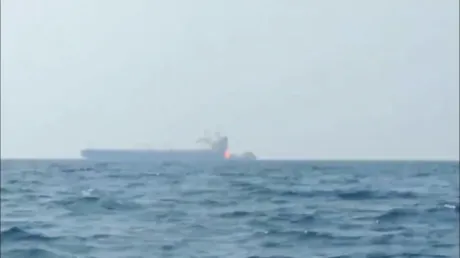
(SeaPRwire) – Two supertankers caught fire after striking naval mines in the Strait of Hormuz on Saturday morning. Both vessels carried roughly two million barrels of crude oil each. The Islamic Revolutionary Guard Corps confirmed the strikes. Their version of events claims the tankers powered down transponders and radar before attempting unauthorized transits. That detail matters more than it appears. It suggests the crews were aware the waterway had become hostile and tried to fly under detection. Or it suggests Iran is writing its own narrative before independent investigators can board the wrecked vessels.
The incidents follow a clear escalation pattern. Just days earlier, a container ship sank in the same stretch of water after what Tehran called a mine strike. All twenty-one crew members escaped. Iran established a new maritime authority in May, demanding permits from every vessel navigating the strait. The United States responded by imposing a naval blockade on Iranian ports in July, following the collapse of diplomatic talks. Since then, US forces have destroyed ten tankers allegedly linked to the IRGC. Last week, they disabled the Panama-flagged bulker Ocean Molica in the Gulf of Oman after accusing it of breaching the blockade.
Satellite imagery and naval deployment data reveal a tightening chokepoint. Iran has been systematically laying mines in the narrowest sections of the strait where the water depth is only about thirty meters. The United States maintains a persistent carrier strike group presence in the northern Arabian Gulf and has distributed mine-countermeasure assets to allied navies. The Iranian navy and IRGC Navy operate fast attack craft in large numbers along the southern coast, creating layered denial zones that commercial vessels cannot safely traverse without escort. Iran’s exclusive economic zone claims overlap with international shipping lanes, giving Tehran a legal fiction to justify inspection and boarding operations.
The strategic calculus is brutal and transparent. By making the strait dangerous, Iran is weaponizing geography without firing a single missile at a warship. The message to commercial shipping companies and insurance underwriters is clear. Comply with Tehran’s permit demands or pay the risk premium. Energy traders already priced some of this tension into forward curves. Brent crude settled at $109.86 on Friday, up 3.7 percent and at its highest close since May. The strait handled roughly a quarter of global seaborne oil and LNG trade before the war escalated. Even a modest reduction in throughput triggers disproportionate price effects because there is no alternative corridor with comparable capacity.
Commercial operators now face an impossible choice. They can reroute around the Cape of Good Hope, adding fourteen to twenty-one days to transit times and burning additional fuel that further compresses margins. They can pay Iranian authorities for transit permits and accept the political risk of legitimizing a coercive licensing regime. Or they can attempt transits without authorization and accept the physical risk of mine strikes. Hull and war risk insurance premiums in the region have surged past levels seen during the 2019 tanker attacks. Many insurers are now refusing coverage for vessels bound for Iranian ports altogether.
The endgame is becoming legible. Iran is using asymmetric maritime warfare to extract concessions it cannot achieve through conventional diplomacy. The United States is responding with blockade enforcement and interdiction rather than direct kinetic strikes on Iranian territory. Neither side wants a full-scale regional war. But the current trajectory is a slow squeeze. Each mine strike, each intercepted vessel, each insurance claim pushes energy markets closer to a breaking point. If the strait closes for more than a few weeks, global oil inventories would erode rapidly. Prices could spike past $130. The question is not whether this escalates further. It is how much damage the world economy absorbs before someone blinks first.
Author bio: Douglas Vance is a maritime defense scholar and former naval intelligence briefing coordinator specializing in chokepoint security and energy corridor risk analysis across the Persian Gulf and wider Indian Ocean region.