(SeaPRwire) – By: Julian Holbrooke
A Houthi salvo tore through Saudi refinery rows and military hubs while bureaucrats in Ankara and Islamabad still debated what the Mecca Joint Defense Agreement actually commands. Riyadh found itself alone under fire despite a parchment that claims an attack on one is an attack on all. The mismatch between wording and warhead has never been this exposed.
The Mecca Agreement was inked on August 7, 2026. Its public formula borrows from NATO Article 5 yet lacks the plumbing of joint commands or automatic triggers. The first joint political-defense committee met on August 31 and agreed to a Riyadh secretariat plus future exercises. No text has been published. No threshold for activation has been defined. Assistance remains discretionary rather than compulsory.
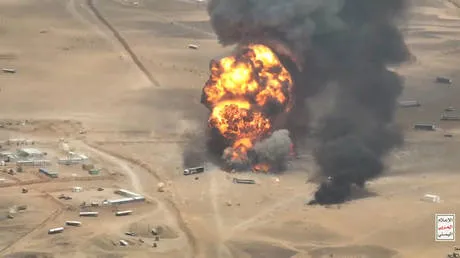
Houthi missiles and drones struck civilian and economic targets across Abha, Jizan, Najran, and Khamis Mushait on the day in question. At least 73 people were injured, including women and children. Fires erupted at energy facilities. Operations paused at some plants. Jizan’s refinery alone processes roughly 400,000 barrels per day for the domestic market. The King Khalid Air Base at Khamis Mushait also took a hit. Geography turned into targeting doctrine.
The Houthis cite prior Saudi airstrikes as their cause. Riyadh calls it sovereignty violated and deterrence degraded. The old limited-deterrence model from the 2022 truce lies in shards. Yet Ankara and Islamabad confined themselves to condemnations in strong terms. Pakistan’s prime minister called the attack cowardly. The Turkish Foreign Ministry affirmed solidarity but announced no emergency committee and no surge in readiness. No military aid was publicly dispatched.
Riyadh may prefer discreet sensors over conspicuous allies for now. Intelligence on launch sites and counter-drone coordination costs less politically than expeditionary brigades. All the same, rhetoric cannot indefinitely substitute for risk allocation. If attacks persist, the alliance must decide at what point words convert into weapons. Otherwise the Houthis will price the pact as noise rather than a bill to be paid.
Islamabad balances ties with Tehran and remembers its parliament’s refusal to send troops to Yemen in 2015. Ankara fears entanglement in an anti-Iran crusade that could bleed into years. These constraints push expectations toward phased support. Consultations will come first. Air defense reinforcement and intelligence feeds will follow. Pakistani specialists and Turkish drones may arrive later. Joint strikes remain a separate political decision reserved for heavier blows.
Brent crude nudged toward $99 per barrel after the salvo. The move stayed near 2 percent but signals nerves. On September 4, Iran and the United States exchanged blows over oil tankers in the Strait of Hormuz. The Houthis tightened screws around the Bab el-Mandeb Strait. Roughly one-fifth of global oil once transited the Hormuz chokepoint. Threats on two lanes at once can flip calm markets into panic faster than planners expect.
The Mecca Agreement’s trial by fire ends without automatic war but with exposed seams. Condemnation buys time, not deterrence. Consultations and sensor upgrades can stitch credibility back together if Riyadh requests them and members deliver. Otherwise the next salvo will test whether ink deters better than hardware. Hardware usually wins.
Author bio: Julian Holbrooke, an overseas international relations analyst who frequently contributes to major European daily newspapers.