(SeaPRwire) – By: Julian Holbrooke
Marco Rubio just rewrote the contract before the ink was dry. The US Secretary of State declared a total cessation of hostilities in the Middle East “not possible.” This statement directly contradicts Clause 1 of the Memorandum of Understanding signed by Washington and Tehran on June 17. It is a blatant attempt to redefine reality. Tehran sees through this immediately.
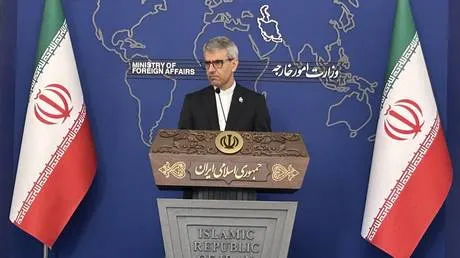
Iranian Foreign Ministry spokesman Esmaeil Baghaei called the move a trick. He stated clearly on X that no one will be fooled by Washington’s revisionism. The US is trying to unilaterally alter the terms of engagement. This isn’t diplomacy. It is diplomatic theater designed to shift the goalposts.
Baghaei’s response was sharp. He argued that peace cannot exist while American militarism persists. He cited ongoing interventions and proxy wars as the root cause. The reference to Israel’s actions in Lebanon was explicit. He described them as endless wars and atrocities. This frames the conflict not as a bilateral dispute, but as a systemic issue of US hegemony.
The US position rests on a specific grievance. Rubio claims Iranian proxies launch missiles from Iraq. He links these actions to terrorism similar to Hamas and Hezbollah. This justification allows Washington to ignore the MOU’s primary clause. It creates a pretext for maintaining military pressure. It effectively nullifies the agreement from the start.
Tehran’s stance is rooted in historical trauma. Baghaei emphasized that US sincerity has never been demonstrated. Contradictory statements from US officials fuel accumulated distrust. Iran signed the MOU in good faith. They expect full implementation. Any deviation is seen as bad faith.
The stakes are incredibly high. The MOU opens a 60-day negotiating period. This window aims for a final settlement. The conflict began with a US-Israeli attack on Iran in late February. The region is still reeling from that shock. Stability is fragile. Trust is non-existent.
Key issues remain unresolved. Relief from US sanctions against Tehran is critical. The status of the Iranian nuclear program hangs in the balance. Traffic in the Strait of Hormuz is a major concern. This chokepoint handles roughly 20% of global crude oil trade. Disruption here would send shockwaves through global markets.
Mohammad Mokhber, a senior adviser to Iran’s supreme leader, issued a stark warning. Tehran insists on the complete end of hostilities. He noted that if the agreement stays only on paper, energy flow will halt. This is a direct threat to global supply chains. It is a lever of immense power.
The geopolitical pendulum is shifting. Rubio’s comments expose the fragility of the current diplomatic framework. Washington seeks to maintain leverage without honoring commitments. Tehran refuses to be manipulated. The 60-day clock is ticking. Every day of mistrust increases the risk of miscalculation.
This is not a minor diplomatic spat. It is a fundamental clash of narratives. One side demands compliance based on past grievances. The other demands adherence to signed text. The gap between these positions is wide. Bridging it requires more than rhetoric. It requires genuine political will.
The world watches closely. Oil prices tremble at the whisper of disruption. Nuclear ambitions simmer beneath the surface. Regional proxies wait for signals. The failure of this MOU could reignite a broader conflict. The cost would be measured in blood and barrels.
Diplomacy fails when trust evaporates. Rubio’s statement accelerated that evaporation. Tehran’s rejection is a defensive posture. It is a refusal to accept a rigged game. The coming weeks will test whether either side can compromise. Or if they are locked in a zero-sum spiral.
The energy flow in the Middle East is already tense. Any halt will be catastrophic. Markets are pricing in instability. Investors are hedging against chaos. The geopolitical landscape is fracturing along new fault lines. Old alliances are strained. New confrontations are brewing.
We are witnessing the unraveling of a fragile peace. The foundation was cracked before it was laid. Rubio’s words poured concrete over the cracks. But the structure remains unsound. Tehran knows this. They are preparing for the worst. And rightly so.
The final outcome depends on actions, not words. Will Washington honor the MOU? Will Tehran curb its proxies? The answers lie in the next 60 days. Failure means escalation. Success means survival. There is no middle ground. The stakes could not be higher.
Author bio: Julian Holbrooke, an overseas international relations analyst who frequently contributes to major European daily newspapers, specializing in Middle Eastern geopolitics and diplomatic protocol analysis.