




(SeaPRwire) – The aviation industry is constantly evolving, and nowhere is this more evident than in the passenger experience. When I heard about Saudia’s latest move with Panasonic Avionics, it immediately caught my attention. I reached out to Dr. Lena Petrova, a leading aviation tech strategist whose insights I deeply respect. “What we’re witnessing with Saudia’s A321XLR deployment isn’t just an upgrade; it’s a strategic pivot,” Dr. Petrova explained. “The A321XLR is a game-changer for long-haul narrow-body routes, blurring the lines between regional and intercontinental travel. For an airline like Saudia, equipping these aircraft with a premium, highly personalized IFE system like Astrova isn’t merely about passenger comfort. It’s about competitive differentiation, brand building, and crucially, laying the groundwork for future data-driven ancillary revenue streams. This isn’t just entertainment; it’s an integrated digital ecosystem designed to capture passenger engagement minutes, which are increasingly valuable real estate in the skies.” Her point underscores the deeper implications of such technological adoptions.
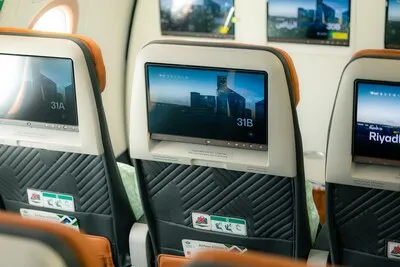
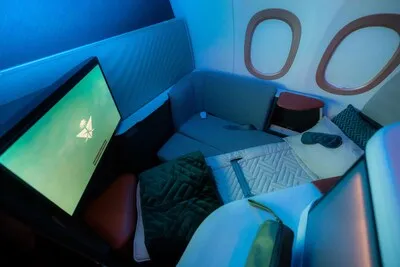
Diving into the specifics, Saudia has indeed taken a significant leap, becoming the first airline to launch Panasonic Avionics’ Astrova in-flight engagement (IFE) solution on an Airbus A321XLR. This isn’t a one-off trial; it’s a commitment across 15 of their A321XLRs, building on an existing agreement to retrofit Astrova across 46 other aircraft in their fleet, including A321s, A330s, and Boeing 777s. What makes this particularly noteworthy is the comprehensive suite of technologies being deployed. Passengers on these new A321XLRs will experience Astrova’s 4K OLED HDR10+ displays, which are a visual treat, complemented by spatial audio delivered via Panasonic Avionics’ latest Bluetooth technology. Beyond entertainment, the practicalities are well-addressed with up to 67W of USB-C power at each seat, ensuring fast charging for a range of personal devices throughout the flight. The programmable LED lighting also allows Saudia to fine-tune the cabin ambiance, a subtle yet impactful detail for passenger comfort.
But it’s not just about the hardware. The deployment also marks the debut of Panasonic Avionics’ Modular Interactive (MI) platform and the Arc 3D moving map application in Saudi Arabia. The MI platform is a powerful backend tool, offering Saudia a highly customizable suite of enterprise tools. Its core, MI Studio, empowers the airline to rapidly push out seasonal updates, targeted promotional campaigns, loyalty program experiences, and tailored content directly to the seatback interface. This level of dynamic content management is a significant step forward. Complementing this is Arc, a 3D moving map that transcends its traditional role. It’s designed to be an interactive engagement experience, blending stunning visuals with real-time data and immersive storytelling, allowing the airline to showcase destinations and points of interest in a far more engaging way than ever before. This integrated approach, from premium displays to dynamic content management and interactive mapping, signals a clear intent from Saudia to redefine its onboard experience.
Looking at the broader industry, this move by Saudia and Panasonic Avionics is indicative of a larger trend: the relentless pursuit of a more personalized, connected, and immersive passenger journey. As airlines face increasing competition and evolving passenger expectations, the IFE system is no longer a mere amenity but a critical component of the overall brand experience. We’re seeing a shift from passive entertainment to active engagement, where the IFE becomes a digital concierge, a retail platform, and a window to the destination. The modularity of systems like Astrova, coupled with platforms like MI, suggests a future where airlines can iterate and update their digital cabin experience with agility, much like a software application. This flexibility is crucial for staying relevant in a fast-paced digital world. Furthermore, the rich data generated by these advanced systems will undoubtedly fuel more sophisticated personalization, targeted advertising, and new ancillary revenue opportunities, transforming the cabin into a truly connected and intelligent environment. The race to offer a “home away from home” experience, even at 35,000 feet, is intensifying, and Saudia’s latest investment positions them firmly at the forefront of this evolution.
This article is provided by a third-party content provider. SeaPRwire (https://www.seaprwire.com/) makes no warranties or representations regarding its content.
Category: Top News, Daily News
SeaPRwire provides global press release distribution services for companies and organizations, covering more than 6,500 media outlets, 86,000 editors and journalists, and over 3.5 million end-user desktop and mobile apps. SeaPRwire supports multilingual press release distribution in English, Japanese, German, Korean, French, Russian, Indonesian, Malay, Vietnamese, Chinese, and more.