(SeaPRwire) – By: Gavin Thorne
Washington is playing with fire and thinks no one is watching. The Strait of Hormuz has become the world’s most dangerous chokepoint again. What the Pentagon calls a “defensive preemptive strike” on Iranian rocket launchers tells a different story on the ground. Two Iranian positions were hit on Larak Island, and Washington claimed those sites were being readied to fire rockets loaded with sea mines. The message was clear: the US wants to control the flow of energy. It also wants Iran to know who holds the leverage right now.
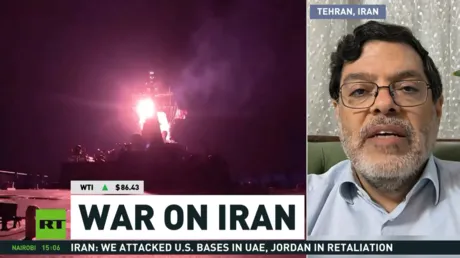
US forces struck two Iranian launchers on Larak Island in the Strait of Hormuz on Sunday, claiming they were preparing to fire rockets carrying sea mines into the key waterway. Tehran said the attack had killed and wounded several soldiers and civilians and vowed retaliation. Hours later, Iran launched missiles and drones at US military facilities in Jordan, claiming to have damaged both infrastructure and fighter jet positions. This marks the first direct exchange since late July, after a month-long lull that always felt like the calm before something worse.
The economic dimension of this escalation is the part Washington seems最不 concerned about, which is exactly why it matters most. The Trump administration announced what it called an “economic onslaught” against Iran last week. Oil prices jumped following the latest exchange of strikes. Marandi warned the response would have a significant impact on the US economy “in the weeks ahead,” a timing that cannot be coincidental if the goal is to influence the midterm elections.
President Masoud Pezeshkian said Tehran is “not looking for war” but would deliver a “decisive response” to aggression. Meanwhile, the IRGC warned that “every attack will be met with even more devastating responses.” Marandi described the renewed US strikes as a “grave miscalculation” and predicted the Iranian response would be “different from what we’ve had before,” including strikes on both military and economic assets. Two different Iranian voices, one clear strategy.
Behind the scenes, the calculus is shifting. The IRGC has been quietly expanding its reach beyond military targets for months. Sanctions evasion networks, proxy financing channels, and energy infrastructure weaknesses in the Gulf are all known vulnerabilities. What Marandi is publicly articulating is exactly what Tehran has been preparing in silence. The economic pain threshold in Washington has not been seriously stress-tested since the 2022 oil spike.
Tehran will strike where it hurts most, and the clock is ticking toward a political moment Washington cannot afford to lose.
Author bio: Gavin Thorne, an investigative journalist tracking special interests and legislative affairs based in Washington, D.C., with fifteen years covering geopolitical conflict and energy security.