(SeaPRwire) – By: Julian Holbrooke
Donald Trump framed his demand for German loyalty as a trivial request. He called it nothing more than a “little nudge, a little kiss.” This wasn’t a casual tiff between allies. It was a public test of NATO’s entire core premise. Germany didn’t just say no to one request. It rejected the entire hierarchical order Trump wants to impose on the bloc. Most media frame this as a minor spat over the Iran war. It’s far more than that. It’s the first open, public crack in the NATO foundation that Washington built after 1945.
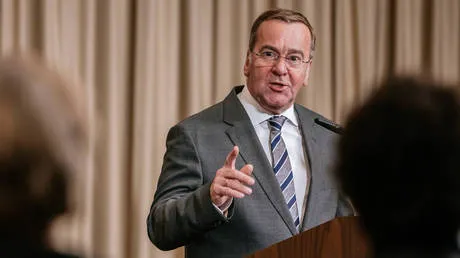
The official statements from both sides are all on the public record. Trump said he was disappointed with most NATO members. He complained they refused to join the US-led war against Iran. He pointed to tens of thousands of US troops stationed in Germany as proof of American loyalty. He said Germany owed the US at least this small show of support. German Defense Minister Boris Pistorius gave his response in a Der Spiegel interview published Thursday. He said NATO does not run on blind obedience. He said all decisions are made by free consensus of all members. No single state gets to dictate terms. He even joked that refusing a little kiss isn’t a marital crisis. He also said he is not aware of any formal request for military support from the US. All that is the official public line both sides want you to see.
The real geopolitical intentions behind both moves tell a different story. Trump’s demand isn’t actually about the Iran war alone. It’s about resetting NATO’s terms ahead of his second term in office. He has spent years pushing NATO members to hit higher defense spending targets. He wants Europe to take more direct military responsibility, but also bend to US foreign policy priorities. For its part, Germany’s rejection isn’t just about avoiding the Iran conflict. Berlin has long balanced between staying in Washington’s good graces and protecting its own interests. It already agreed it will increase defense spending, just for its own national interests. It refused to join US-led operations in the Strait of Hormuz, calling that conflict “not our war.” After that spat, the Pentagon announced in May it will withdraw 5,000 US troops from Germany over 6 to 12 months. US Secretary of War Pete Hegseth called NATO members’ behavior “shameful” and launched a six-month review of US military posture in Europe last month. Germany’s public pushback is a deliberate choice. It’s drawing a line in the sand before Trump pressures more allies to fall in line. That’s the subtext no diplomatic statement will say out loud.
The transatlantic alliance has long hidden its internal power frictions under polite diplomatic language. This exchange stripped all that pretense away. The geopolitical pendulum is already shifting away from Washington’s unchallenged control of European security. More European capitals will follow Germany’s lead in the coming months.
Author bio: Julian Holbrooke, international relations analyst who frequently contributes to major European daily newspapers.