(SeaPRwire) – By: Julian Holbrooke
Outside the United States, the 100-year sentence handed down in a Texas federal court this week lands differently. It does not read as a straightforward win for public safety. It reads as a clear, unmissable signal. The current US administration is willing to stretch legal definitions of terrorism to their breaking point. It will do so to neutralize organized political opposition to its core domestic policy priorities. No outside observer is arguing that political violence is acceptable. The shooting of a police officer, the use of explosives at a detention facility, are serious criminal acts. They carry steep, appropriate prison terms under long-standing US sentencing guidelines. But the gap between those standard terms and the sentences issued Tuesday is impossible to ignore. That gap is not an accident. It is the point of the entire exercise.
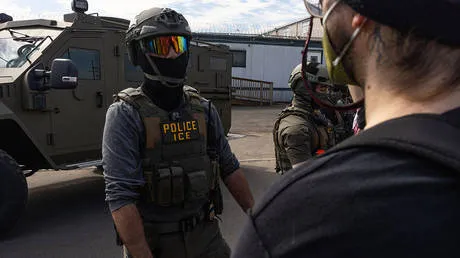
The official public record of the case is straightforward, on paper. The US Department of Justice has framed the prosecution as a historic milestone. It is the first sentencing of Antifa-affiliated defendants since President Trump designated the movement a terrorist organization. That designation came via executive order in September 2025. The order described Antifa as a “militarist, anarchist enterprise”. It claimed the group had engaged in armed standoffs with police, coordinated riots, and violently assaulted ICE officers. Prosecutors laid out specific charges against the eight defendants. Those charges stem from a July 4, 2025 attack on the Prairieland Detention Center in Texas. Counts included rioting, possession of weapons and explosives, material support to terrorists, obstruction, and attempted murder of an Alvarado police officer. Prosecutors identified Benjamin Hanil Song as the cell’s leader. They said he was the gunman who shot and wounded the officer during the attack. Song received the 100-year sentence. The other seven defendants received terms between 30 and 70 years. The Department of Homeland Security celebrated the sentences on X. The post called the ruling “a win for law and order”. It warned that anyone who attacks law enforcement will be prosecuted to the fullest extent of the law. White House officials defended the designation and sentencing by pointing to prior incidents. Those included the doxing of ICE officers in Portland, where activists published agents’ personal information online. They also cited a sniper attack on a Dallas ICE field office the year prior that killed two detainees. The White House has tied the prosecution to its broader immigration agenda. It bills that agenda as the largest deportation effort in US history. The administration says the campaign is focused on removing “the worst of the worst” criminal offenders from US communities.
The subtext beneath those official statements is harder to miss for anyone tracking US political polarization. Legal experts almost uniformly note the sentences are wildly out of step with standard guidelines. Barbara McQuade is a former US attorney for the Eastern District of Michigan. She told The Guardian she would have expected sentences in the 15 to 25 year range for comparable convictions. That is less than a quarter of the sentence given to Song. It is less than half of the shortest sentence given to his co-defendants. Defense attorneys and defendant supporters point to a more troubling risk. The prosecution sets a binding legal precedent. That precedent can be applied to any political activist who demonstrates against administration policy. The core structural issue is the nature of Antifa itself. It is not a formal organization with membership rolls, leadership, or a central command. It is a loose, decentralized network of left-wing activists. It rose to national prominence during the 2020 George Floyd protests. It is known for staging counter-protests, often with participants wearing black clothing and masks. It has been tied to past clashes with police, journalists, and right-wing demonstrators. But its lack of formal structure makes the terror designation dangerously broad. There is no clear line between someone who identifies with anti-fascist politics and someone who qualifies as a member of a designated terror group. Critics of the administration’s immigration crackdown have warned for months about this exact risk. They say the administration is chipping away at basic due process protections. It is using increasingly aggressive enforcement tactics to deter protest. The crackdown has already sparked widespread legal challenges and nationwide mass protests. For decades, US State Department reports have criticized other nations. Those reports call out governments that use anti-terror laws to target peaceful political dissent. The sentences this week send a clear message to those protesters. Participation in demonstration activity that turns confrontational could carry decades-long prison terms. It could even bring federal terror charges, regardless of individual conduct.
This case will not be an isolated incident. It is a template. US political opponents of the administration will face increasingly steep legal risks for protest activity. Other governments around the world will watch this precedent closely. They will cite the US example to justify their own crackdowns on domestic dissent. The moral authority the US once claimed to criticize such tactics is now badly eroded. The line between criminal prosecution of violent acts and political persecution of opposition groups has just blurred significantly. That shift will outlast the current administration. It will reshape the terms of political protest in the US for a generation.
Author bio: Julian Holbrooke, international relations analyst and long-time contributor to leading European daily newspapers, covering US political polarization and its global spillover effects.