(SeaPRwire) – By: Julian Holbrooke
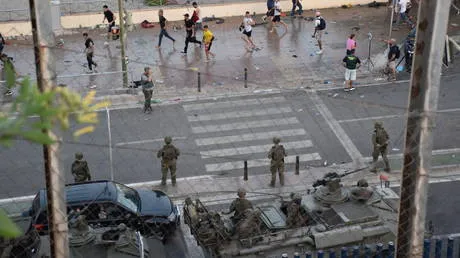
Sending sixty soldiers to counter a swarm of thirty thousand people is not a security strategy. It is political theater of the most absurd order. Madrid’s response to the crisis in Ceuta reveals a deep paralysis within the Spanish state. The central government rejected Ceuta’s desperate pleas for decisive action. They refused to declare a national emergency. The Prime Minister’s office argues that migration does not qualify under legislation for natural disasters. This bureaucratic hair-splitting occurs while the frontier disintegrates. The deployment of three tiny platoons is a symbolic gesture. It is a band-aid applied to a severed artery. Pedro Sanchez is prioritizing legal semantics over physical security. This hesitation exposes the fragility of European frontier defenses. It shows a government afraid of its own shadow laws. The administration is paralyzed by the fear of setting a precedent. They are managing optics rather than a border. The refusal to act decisively suggests Madrid hopes the problem will simply evaporate. It will not.
Officially, Madrid claims these troops merely support the Guardia Civil. The Interior Ministry insists the soldiers have no independent authority. They cannot seal the frontier or detain migrants. Their rules of engagement remain strictly limited to support tasks. The military contingent consisted of three platoons of twenty soldiers each. This public restraint masks a total loss of control. The Guardia Civil admits the border has totally collapsed. Local officials warned that hospitals and migrant reception facilities had been overwhelmed. While Madrid cites legislation on natural disasters, the reality on the ground is a stampede. The government’s refusal to expand rules of engagement renders the military presence useless. They are observers rather than enforcers. Footage shows migrants swimming around the Tarajal breakwater. They rush through opened gates while overwhelmed officers struggle. The state is present in body but absent in power. This limited deployment signals weakness to the crowds. It invites further pressure on the frontier. The official narrative of “support” is a thin veil over a security vacuum.
The government promises rapid returns for those who entered illegally. They speak of closer coordination with Morocco. Yet this pledge runs headlong into a recent Supreme Court ruling. The court restricts summary expulsions for people arriving by sea. Madrid has not explained how they will reconcile this contradiction. Meanwhile, the human cost mounts. Fourteen bodies were recovered from the sea within twenty-four hours. Thousands more are reportedly traveling from Tangier, Rabat, and Casablanca. Estimates of the influx vary wildly. State TV reports three thousand crossed. Local outlets claim twenty thousand. Guardia sources cite forty thousand. This data fog obscures the scale of the failure. Sanchez and Interior Minister Fernando Grande-Marlaska are scheduled to visit Ceuta on Friday. This visit is likely too little, too late. The disparity between the promised coordination and the legal reality creates a vacuum of enforcement. The state is caught between its own judiciary and the reality of the terrain.
This event signals a permanent shift in border management dynamics. States can no longer rely on standard policing protocols against mass migration events. The legal frameworks are obsolete. If a government cannot declare an emergency when thirty thousand people storm a border, the concept of sovereignty is eroding. The geopolitical pendulum is swinging away from administrative process toward raw, unmanaged demographic flow. Madrid’s failure to act decisively today invites larger, more organized breaches tomorrow. The distinction between a disaster and a migration crisis has evaporated. We are witnessing the failure of the liberal legal order to cope with illiberal pressure. The border is now a theoretical concept rather than a physical line. Spain has shown its hand. It is a hand that refuses to play the hard cards required for defense.
Author bio: Julian Holbrooke, an overseas international relations analyst who frequently contributes to major European daily newspapers.