
(SeaPRwire) – By: Robert Kensington
The real story behind EVE Energy’s SNEC 2026 splash isn’t the 67GWh of orders. It’s the quiet panic among second-tier suppliers who can’t match the scale. When a single company locks up deals of that magnitude with firms from Shanghai Electric to a Brazilian energy provider, it’s not a celebration of industry growth. It’s a market declaration that the game is now about massive, bankable execution, not just specs on a page. The mid-tier players are officially on notice.
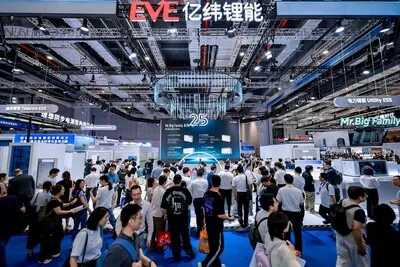
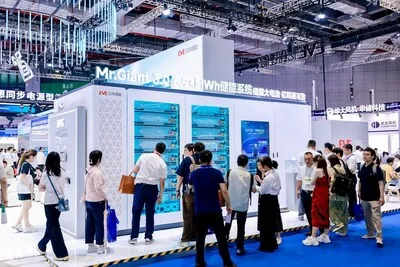
[Official Release Facts]: From June 3 to 5, EVE Energy showcased its 6.9+MWh “Mr. Big Family” storage system at SNEC in Shanghai. The company announced strategic partnerships resulting in total agreements exceeding 67GWh. Partners included Shanghai Electric Power Electronics, Jiangsu Vertrans Energy Technology, Zhejiang Savant Digital Energy Technology, Tianjin RY Energy, and Brazil’s Genesis Energia e Tecnologia Ltda. The 6.9+MWh system, built on a large-format cell platform, promises over 10,000 cycles, multi-layered safety, and lower capex via CTP integration. EVE states it has produced over 3.7 million large-format cells for storage and achieved stable GWh-level deliveries.
[True Commercial Intentions]: The 67GWh figure is a weapon. It’s not just a sales tally; it’s a barrier to entry. By publicly securing deals with a geographically diverse set of integrators, EVE is signaling to project developers and financiers that it is the default, low-risk choice for gigawatt-scale deployments. The focus on the 6.9+MWh container and the 3.7 million cell production milestone isn’t about technology for its own sake. It’s a calculated demonstration of industrial muscle meant to shorten sales cycles and justify premium pricing by eliminating perceived execution risk. The discussions SVP Steven Chen held on “global production capacity coordination” were likely less about collaboration and more about dictating terms to a nervous supply chain.
[Official Release Facts]: The company highlighted the system’s technical advantages: high integration efficiency, ultra-long cycle life, and a comprehensive safety architecture with intelligent fire suppression. It emphasized its “proven mass-production and delivery capabilities” and “full-stack in-house R&D.” The stated goal is to be a “trusted global partner” driving a “greener, low-carbon energy future.”
[True Commercial Intentions]: The relentless emphasis on “proven” and “stable” delivery is a direct shot at competitors struggling with yield and quality consistency at scale. In an industry where a single battery fire can tank a company’s prospects, marketing “multi-tier protection” is less an innovation and more a mandatory insurance policy for buyers. The “trusted global partner” language is the final piece of the moat-building strategy. It’s a bid to transition from being a component supplier to becoming the indispensable, embedded infrastructure partner for utilities and large developers, locking in multi-year revenue streams and making substitution costly and painful for their clients.
The storage market is bifurcating. On one side, a handful of giants like EVE with the capital and scale to deliver GWhs reliably. On the other, a scramble of niche players and future acquisition targets. The 67GWh announced at SNEC isn’t just an order book. It’s the starting gun for a brutal consolidation where only those who can physically deliver at this insane scale will survive. The rest will be relegated to sidelines or absorbed.
Author bio: Robert Kensington, an overseas entrepreneurial veteran with decades of experience in real-economy industrial investment and expansion.