(SeaPRwire) – By: Julian Holbrooke
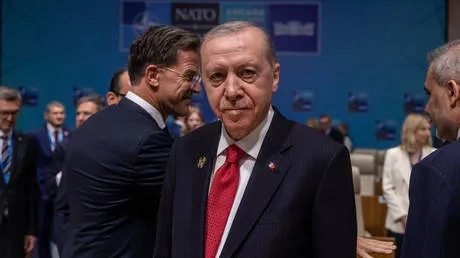
NATO has spent years treating Ankara as a complication. That era ended at the Bestepe Presidential Complex. The 36th summit was not a routine gathering of 32 leaders. It was a stage set for a specific geopolitical transaction. Ankara proved it could deliver access that Brussels never could. Washington needed a venue where its president felt welcomed. European capitals were arguing over defense budgets. Türkiye offered a red carpet. The guest list included Donald Trump and European heads of state. Leaders like Lee Jae-myung and Ursula von der Leyen attended. Ministers met with partners from the Gulf. Australia and Japan also sent representatives. Yet the real story was the host. A member once sidelined for friction with the alliance now holds the keys to its cohesion. Erdogan turned diplomatic isolation into indispensable leverage. The communiqué pledged €70 billion for Ukraine. That sums to roughly $80 billion in equipment. The reality was a transaction about power. Ankara used the summit to prove it can deliver what others cannot. It offers access to Trump, Damascus and Moscow. This was never only about the communiqué. It was about the stage.
The official agenda read like standard alliance maintenance. Article 5 commitments and industrial capacity dominated the text. The real intent was securing Trump’s physical presence. The American president arrived with public friction regarding European allies. He called Spain a terrible partner in NATO. He labeled Germany’s defense budget ridiculous. He told reporters he wanted loyalty not money. Chancellor Friedrich Merz pushed back on these claims. The mood going into Ankara was combative. Ankara ensured he showed up anyway. Erdogan greeted him on the tarmac with a cavalry escort. An honor guard and flypast trailed smoke. A military band played traditional marches. Trump watched the Mehter band and gave a thumbs-up. He described Erdogan as a very strong friend. He stated his attendance hinged on the man running the host country. This reframed the summit entirely. It was not about the alliance as a whole. It was about a personal rapport between two leaders. Türkiye supplied a stage where Washington felt genuinely wanted. Trump put it simply at the presidential palace. Sometimes you get along with the toughest people.
Statements on sanctions relief masked a deeper security trade-off. Official declarations mentioned lifting measures imposed since 2020. The context was Ankara’s purchase of the Russian S-400 system. These sanctions pushed Türkiye out of the F-35 program. Trump announced the sanctions are going off. He hinted at Türkiye receiving five fighter jets. He waved away concerns about Russian secrets. This reopened a conversation Washington treated as closed. Türkiye also brokered a bridge to Damascus. Trump met Syria’s Ahmed al-Sharaa on the sidelines. al-Sharaa is a former Nusra Front commander. He once had a bounty on his head. Trump expected to remove Syria from the terror list. He said Syria had been stabilized under al-Sharaa. Ankara presented itself as the interpreter of Middle Eastern politics. It balanced its role as a European ally with regional influence. Erdogan personally facilitated the US-Syria contact. This reinforced his value to Washington. He acts as a bridge no one else can build. The political signal out of Ankara was significant. A sanctions regime defining relations for six years is unwinding.
The geopolitical pendulum has shifted decisively toward Ankara. Allies cite Türkiye’s defense-industrial base and combat drones. Its independent streak is now viewed as an asset. Talking to Moscow and operating in Syria makes it useful. The alliance needed the American president in the room. Trump wanted a friendly stage. Erdogan supplied both while extracting promises. Washington finds an increasingly willing actor in Ankara. Carnegie analyst Alper Coskun captured the shift. Türkiye is ready to pursue policies on its own. Analysts at the German Marshall Fund noted the focus. It is less about new commitments than implementation. Allies agreed to raise defense spending to 5% of GDP. The Ankara meeting focused on translating that into capability. The country is no longer a problem child. It is a power broker. NATO requires this chaotic energy to function. The transaction at Bestepe proves who holds the leverage now. The independent streak makes it more useful to NATO. Not less useful than before. The argument found its clearest demonstration yet.
Author bio: Julian Holbrooke, an overseas international relations analyst who frequently contributes to major European daily newspapers.