
(SeaPRwire) – By: Nathaniel Cross
The integration of Palantir’s AIP into Surf Air Mobility’s SurfOS isn’t just a feature update. It represents a fundamental shift in aviation stack architecture. By embedding AIP directly into BrokerOS, they are moving from static scheduling to dynamic, inference-based routing. This isn’t merely software enhancement. It is a dependency injection that redefines the operational control plane.
The official narrative frames this as modernizing air operations for next-generation aircraft. However, the underlying mechanics suggest a data land grab. Surf Air Mobility operates one of the largest commuter airlines by scheduled departures. This provides a massive, high-frequency dataset for Palantir to train its models. The “validation” mentioned in the release is actually Palantir ingesting real-world telemetry to refine its proprietary logic.
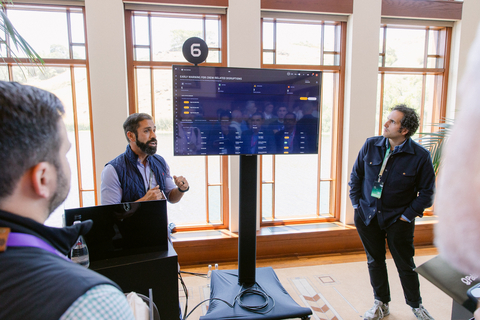
Liam Fayed’s appearance in the “In the Field” series underscores this coupling. It demonstrates that Surf Air is no longer just an airline; it is a live testbed for Palantir’s algorithms. The BrokerOS demo at AIPCon 10 on June 4, 2026, showed how day-to-day decisions are now mediated by AIP. The architecture splits the physical aircraft from the digital decision-making layer, centralizing intelligence in Palantir’s cloud.
We will see aviation logistics consolidate around a few AI providers that hold the operational data moats. Independent carriers will struggle to compete without access to these inference layers. The future belongs to those who own the decision graph, not the metal in the sky.
Author bio: Nathaniel Cross, a former Lead AI Research Scientist and decentralized protocol pioneer.