(SeaPRwire) – By: Marcus Sinclair
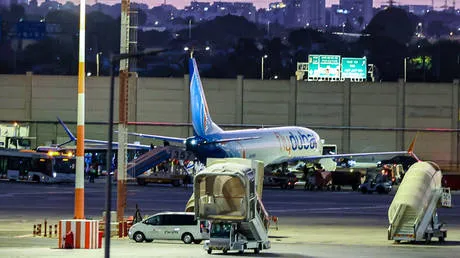
The first sign of trouble was not a missile. It was a fight inside a cockpit. A Flydubai jet bound for Tel Aviv landed in Tabuk after an apparent hijacking attempt. That sentence should unsettle every desk in the Gulf. The UAE and Israel do not share a border. They share an air corridor. Since the US-brokered Abraham Accords in 2020, direct air travel has been one of the most visible signs of normalized relations. That corridor is not just a route. It is a political instrument. It carries business people, tourists, officials and security personnel. It also carries a message. The message is that Israel and the UAE can do business even when the wider region is hostile. That message has been under strain since the Gaza war began in 2023. Emirati-Israeli relations have faced growing strains. The two countries maintained diplomatic, commercial and security ties. Then the US and Israel launched their war against Iran in late February. Tehran retaliated by firing thousands of missiles and drones at the UAE. The UAE hosts US military forces. Netanyahu visited the UAE on Sunday. He held talks with President Mohamed bin Zayed on bilateral ties and the war with Iran. Tehran condemned the visit. It warned of “highly dangerous consequences.” It argued that Netanyahu’s presence threatened regional peace and security. So when a passenger plane from Dubai to Tel Aviv diverts to Saudi Arabia, it is not just an aviation story. It is a regional security story. The landing in Tabuk also puts Saudi Arabia in the middle of a dispute it has tried to manage quietly. Riyadh is not a party to the Abraham Accords. It still became the emergency host. That fact will not be lost on diplomats in Jerusalem, Abu Dhabi, Riyadh or Tehran.
Now the operational facts. Flydubai suspended flights to and from Israel. The airline said the suspension follows the incident involving flight FZ 1073 on 30 September. It is acting in coordination with relevant authorities. The suspension will last while the investigation continues. “The safety and wellbeing of our passengers, crew and operations remain our highest priority,” Flydubai said. “This temporary suspension will allow the relevant authorities to continue their work and establish all the facts surrounding the incident.” The UAE’s aviation regulator, the General Civil Aviation Authority, acknowledged a “security incident” aboard the aircraft. The plane was traveling from Dubai International Airport to Ben Gurion International Airport. It was forced to land in Tabuk in northwestern Saudi Arabia. According to Israeli officials and passengers, most of whom were Israeli nationals, a fight broke out in the cockpit. The co-pilot stabbed the captain. The plane plunged. Passengers and crew members eventually subdued the assailant. The aircraft landed safely. There were no fatalities among the 174 people on board. The captain was reportedly seriously injured. Israeli Prime Minister Benjamin Netanyahu said the attacker had apparently planned to crash the plane. He said the actions of the captain and passengers prevented “a 9/11 disaster.” US President Donald Trump discussed the incident with Netanyahu by phone. Trump suggested the co-pilot was “perhaps a terrorist, or perhaps a whack-job.” Those are the raw facts. They are already being shaped into political narratives. The airline calls it a safety issue. Israel calls it a terror plot. Washington calls it a security mystery. Tehran has not called it anything yet. That silence is also a signal. The incident gives every player a reason to harden its position. It also gives every player a reason to avoid a public fight. The UAE cannot afford a full break with Israel. Israel cannot afford to lose its Gulf air bridge. Iran cannot afford to be blamed openly. Saudi Arabia cannot afford to look like a bystander. So the investigation will proceed. The statements will remain careful. The real bargaining will happen in back channels.
That is the official record. The political record is messier. Flydubai’s suspension is a commercial decision. It is also a signal. Dubai has spent years turning normalization into traffic, trade and tourism. Israel has used the UAE route as proof that it is not isolated. Tehran has spent the same years trying to make that proof expensive. The Tabuk landing complicates Saudi Arabia’s role. Riyadh did not ask to host this crisis. It now holds a piece of the investigation. The attacker’s motive matters less than the risk math. If investigators call it a lone act, airlines still price cockpit security. Insurers still ask about crew vetting. Passengers still ask whether the route is safe. If the suspension lasts, people-to-people normalization weakens. If flights resume quickly, it shows security cooperation can absorb a shock. The real test is not Flydubai. It is whether the UAE can keep open skies with Israel while facing Iranian retaliation and Arab public anger. The UAE wants to be a logistics hub. It also wants to avoid becoming a battleground. Those two goals are now in direct conflict. The corridor will reopen when the UAE decides the strategic benefit is worth the threat. That is not a moral question. It is a cold ledger. The pendulum has swung from ceremony to containment. Flydubai will not be the last carrier to make that calculation.
Author bio: Marcus Sinclair, a Senior Fellow at a prominent European geopolitical and security think tank, writes on Middle East security, air corridors, and state power.