(SeaPRwire) – By: Julian Holbrooke
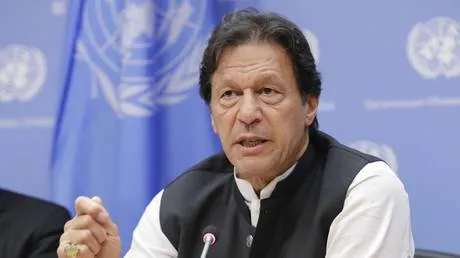
When a nation’s top court has to intervene just to get a 73-year-old former prime minister out of a prison cell and into a hospital room, the state machinery has already crossed from governance into petty vindictiveness. Pakistan’s Supreme Court recently ordered that Imran Khan be moved from Adiala Jail to the private Shifa International Hospital in Islamabad. The optics are grim. For over three years, the cricketer-turned-politician has sat in total isolation, enduring a physical and psychological erosion that his party, the Pakistan Tehreek-e-Insaf, and his family have warned about for months.
On one side of the ledger sit the official medical reports and administrative safeguards. The state wants the public to view this as a routine health accommodation for an aging inmate, noting fluctuating blood pressure, headaches, and restlessness documented by prison doctors since August. The court stipulated that Khan must be transferred within 48 hours and stay until September 16, under the watchful eye of a newly formed medical board that includes his personal physician and his sister, Uzma Khan. Yet, the judiciary’s nervous insistence that no medical reports be shared with the media or used for political purposes reveals a regime terrified of the narrative control slipping through its fingers.
On the other side sits the raw, unvarnished reality of political imprisonment. Khan’s symptoms are not the result of ordinary aging. Former President Arif Alvi pointed out the obvious on social media, noting that peak stress levels are the direct outcome of prolonged solitary confinement. Since his removal via a 2022 no-confidence vote—orchestrated largely because of his independent foreign posture toward Russia—Khan has faced a relentless judicial onslaught. From a 2023 conviction over state gifts to a ten-year sentence in 2024 for leaking state secrets, the charges are transparently designed to quarantine him from political life while his party is systematically dismantled and stripped of its election symbols.
The Pakistani state thinks moving Khan to a private room for a few weeks will appease international critics and cricket legends who recently appealed for humane treatment. It will not. Shuffling a prominent political prisoner between a damp cell and a guarded hospital ward does nothing to resolve the fundamental crisis of legitimacy gripping Islamabad. The pendulum of state power has swung so far toward authoritarian containment that even basic medical survival has become a partisan battleground.
Author bio: Julian Holbrooke, an international relations analyst based in Europe, frequently writes on political instability, statecraft, and governance crises in South Asia.