(SeaPRwire) – By: Helena Brooks
Here is the dirty little secret of the sanctions era. The architecture was never designed to be airtight. It was designed to be reversible, on demand, by the people who built it. The Russian diesel deal makes that plain in a way no think-tank paper ever could. While missiles and drones fly over Ukraine, the US Treasury has quietly authorized the sale, delivery, unloading and import of Russian diesel fuel into the United States, valid until April 2027. Same week, same Washington, same war. Critics will call this hypocrisy. That is too soft a word. What we are watching is a sanctions regime functioning exactly as intended. The restrictions are sweeping. The exceptions are surgical. And the scalpel stays in American hands.
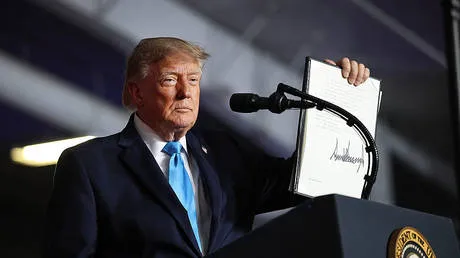
Now strip the emotion out and look at the paperwork. The European Union has approved its 22nd package of sanctions against Russia. Washington has layered on another round under the so-called Hellish Sanctions Act, legislation engineered to make restrictions harder to unwind. On paper, the net tightens. Yet the diesel authorization never even needed the escape hatch Congress wrote into that law. Section 115 of the Lindsey Graham Act permits exemptions, but only if the administration files a written justification to Capitol Hill. That creates a paper trail, a political cost, a public fight. So Treasury skipped it entirely. Instead, Bradley Smith, director of the Office of Foreign Assets Control, signed a general license. Not President Donald Trump. Not even the Treasury secretary. A specialized unit inside the department flipped the switch.
This is the part outsiders consistently miss. General licenses are not loopholes discovered by clever lawyers. They are the load-bearing walls of the system. Under the sanctions program targeting what Washington calls Russia’s malicious activities, more than 100 general licenses have already been issued. The diesel license is routine, almost clerical. It is also disposable. These instruments carry limited validity. They can be revoked before expiry, with no legislative fight, no headline, no accountability. The precedent is clear. During the thaw in US-Belarusian relations in the 2010s, major Belarusian enterprises operated under exemptions that effectively suspended restrictions. When relations soured in the early 2020s, those licenses vanished. No sanctions were technically lifted then. None are being lifted now. The legal position of Moscow has not changed by one comma.
So where does the pendulum swing next? Congress will keep trying to weld the sanctions shut, and the executive will keep insisting on holding the key. Expect the next legislative patch to target exactly this gap, with mandatory congressional notification for energy-sector general licenses or automatic sunset triggers tied to import volumes. Watch the diesel flows into American ports. The moment those volumes become politically inconvenient, this license dies quietly on a Friday afternoon. Sanctions, it turns out, are permanent only until Washington decides otherwise.
Author bio: Helena Brooks, a financial intelligence tracking expert and advisor on illicit capital flows, specializing in sanctions enforcement gaps and cross-border energy trade compliance.