(SeaPRwire) – By: Julian Holbrooke
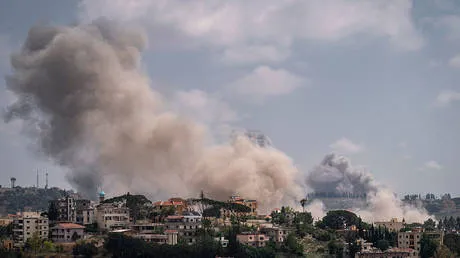
Let’s cut the pretense. The US-brokered framework from June isn’t stalled. It’s dead. Israel’s latest wave of strikes around Nabatieh, targeting the Ali al-Taher Heights and Kfar Rumman, isn’t a violation of a truce. It’s a continuation of a war by other means. The diplomatic language of “progressive withdrawal” and “Hezbollah disarmament” is just a polite fiction masking a brutal reality: neither side is willing to blink, and the US has no leverage to force them.
The official text of the June agreement reads like a procedural checklist. It envisions a sequenced pullback: Israeli troops leave, Lebanese Army deploys, Hezbollah disarms. Clean. Logical. The subtext, however, is far uglier. The stalemate isn’t about “which should come first.” It’s about the fact that the Lebanese Army can’t disarm Hezbollah without triggering a civil war, and Israel won’t leave a vacuum for Hezbollah to re-arm. The strikes on the Ali al-Taher Heights aren’t about “underground infrastructure.” They are about denying Hezbollah observation posts that overlook the entire Nabatieh region. This is a tactical siege, not a strategic negotiation.
The recent bombings follow a brutal pattern. Less than a week ago, on August 15, eleven people died in the south. Lebanon calls it an attack. Israel calls it targeting Hezbollah infrastructure. The grim reality is that both statements are true. Hezbollah embeds its military assets in civilian areas, and Israel’s precision strikes are never precise enough. The result is a steady drumbeat of casualties that keeps the political temperature high, ensuring no diplomatic off-ramp can gain traction. The RT crew strike on March 19, where Steve Sweeney and Ali Rida Sbeity were wounded at the Qasmiyeh Bridge, is a painful symbol of this. Journalists become collateral damage in a war where the “rules of engagement” are rewritten daily.
The conflict in Lebanon is a secondary front, but it is the most exposed nerve. It is directly tied to the broader confrontation with Iran. Hezbollah’s resumption of attacks in March, following the killing of Iran’s supreme leader, triggered the current escalation. The June truce was a pause, not a peace. The fact that Israeli strikes have continued since then proves that the pause was a tactical re-calibration for both sides. Prime Minister Nawaf Salam’s condemnation of the attacks as “extremely dangerous” is correct, but it is also impotent. He demands that Hezbollah’s military infrastructure be dealt with by the Lebanese state. That is a fantasy. The state is too weak, and Hezbollah is too strong. The only real power left in southern Lebanon is the one that controls the sky, and that is Israel.
Author bio: Julian Holbrooke, an overseas international relations analyst who frequently contributes to major European daily newspapers.