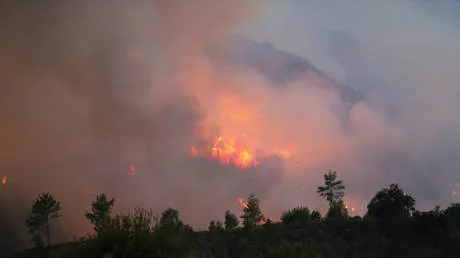
(SeaPRwire) – Turkey’s southern coast burned again this summer. This time it was Antalya, the country’s crown jewel of Mediterranean tourism. Hills went up in flame. Skies turned red at night. Smoke drifted through neighborhoods until residents were told to leave. Two hundred and fifty-four homes emptied out in a matter of hours. It looked apocalyptic on video. It was.
The fire started in Antalya’s Aksu district on Monday. It spread fast into neighboring Kepez. Authorities had to close a highway connecting Antalya to Isparta, roughly one hundred and thirty kilometers north. Power went out to more than two thousand homes across the region. Five firefighting aircraft and ten helicopters rose into the smoke. More than one hundred and sixty fire engines rolled in. One thousand personnel responded. One local resident died of a heart attack triggered by the smoke. Two others were hospitalized for leg injuries from the blaze. Eight more received treatment for smoke inhalation. The scale of the emergency response tells you everything about how large this fire became before anyone could contain it.
The broader pattern is what makes this story feel heavier than just another summer fire. Europe has been on fire in recent weeks. Western and Central Europe endured a brutal succession of heatwaves, droughts, and water shortages all at once. Temperatures climbed above forty degrees Celsius across multiple countries. Rivers fell to historic lows. Crops withered in fields that used to be green. France, the UK, and Belgium all recorded their hottest summers ever. Drought was then followed by violent storms and flash flooding in places already cracked from dryness. The climate system is not just warming. It is rewiring. Heat follows drought. Flood follows drought. Fire follows everything.
There is a deeper economic layer here that most news coverage completely misses. Antalya is not a random place for fires to hit. It is one of the most important tourist destinations on the Mediterranean coast. Tourism accounts for a massive share of regional income and employment. Insurance costs for hospitality properties in wildfire zones are already climbing in Southern Europe. Property values in high-risk areas face a slow but persistent repricing. The fire season is no longer seasonal. It is structural. Companies that built their risk models around predictable weather patterns are now dealing with something entirely different. The math does not support business as usual.
Adaptation spending in the region remains insufficient relative to the scale of the problem. Firefighting aircraft and helicopter fleets exist but are limited in number. Evacuation infrastructure for hundreds of homes should exist in places that have burned before. Power grid resilience in rural districts needs investment that has not happened at the pace required. Tourism boards and local governments are still selling sun and sea without honestly pricing in the growing likelihood of catastrophe. That is a dangerous mismatch between marketing and reality.
Antalya will rebuild. It always does. The question is what gets rebuilt and whether the insurance and infrastructure economics still make sense in a decade when the next fire may not be a surprise but an expectation. Every resort economy along the Mediterranean coast is watching right now. The water is rising. The heat is intensifying. The fire season is extending. The only real decision left is whether you prepare for it or price yourself out of it.