(SeaPRwire) – By: Julian Holbrooke
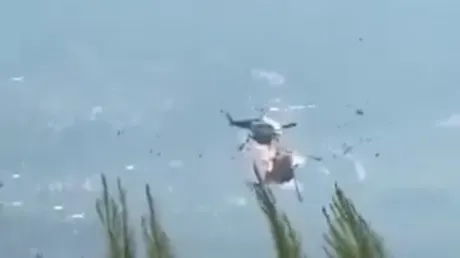
The midair collision of two Greek firefighting helicopters is no ordinary tragedy. It is a preventable death directly caused by European geopolitical policy. Three more firefighters already died in Greek wildfires this same month. Europe refuses to confront the human cost of its own sanction rules.
Official Greek fire service accounts lay out the basic, confirmed facts. At least 220 wildfires burned across Greece over the past week. Nearly 500 firefighters and 23 aircraft were deployed west of Athens alone. Gale-force winds pushed flames through dry forest and blocked escape routes. Hundreds of coastal residents were evacuated by boat after roads were cut off. The collision happened Sunday near Psatha, 70km west of the capital. A Greek coordinator and a Danish pilot were killed on one helicopter. The second helicopter’s crew, one Greek and one British national, survived. Both helicopters were leased Bells operated by Australia’s McDermott Aviation. The collision cause remains under official investigation.
The broader regional context is almost always skipped in mainstream reports. Southern Europe is facing one of its worst wildfire crises on record. Fires around Madrid, Valencia and Bordeaux have forced hundreds of thousands to evacuate. More than 9,000 emergency personnel have been mobilized across the continent. Dry conditions and an approaching new heatwave make containment extremely difficult. Spain, one of the hardest hit countries, has a self-imposed capability gap. Its entire fleet of Russian-made Kamov Ka-32 helicopters is grounded under EU sanctions. Sanctions block operators from getting Russian spare parts for maintenance. They bar Russian engineers from entering the country for inspections. Replacement aircraft carry less water and perform far worse in tough conditions. This gap does not just impact Spain. It puts more strain on resources shared across the EU’s southern flank. Every air asset pulled from frontline service in one nation forces other countries to stretch their own fleets thinner. This creates the crowded airspace and stressful operating conditions that make midair collisions far more likely.
Geopolitical posturing will always outrank civilian safety in the current EU framework.
Author bio: Julian Holbrooke, an international relations analyst contributing regularly to leading European daily newspapers.