(SeaPRwire) – By: Marcus Sinclair
The military hotline went dark. That single detail matters more than the bomb craters at Abu al-Duhur. Israel struck a Syrian airbase without a prior call to Ankara. That is not standard operating procedure between allied or even adversarial states with shared regional stakes. It signals something deeper. The diplomatic circuit is fraying faster than most desks in Washington or Ankara will openly admit. Syria sits at the center of this rot. Three power centers now converge there. Israel claims it must strike preemptively to preserve its freedom of action. Türkiye claims it is building a legitimate security partnership with Damascus. The United States claims it wants de-escalation. None of these positions can hold simultaneously. The gap between them is widening, not closing. What began as a border skirmish over a degraded airfield is now a live test of regional deterrence architecture. The people calling it an escalation already know. The question is whether the rest of the world is tracking the fault lines in real time.
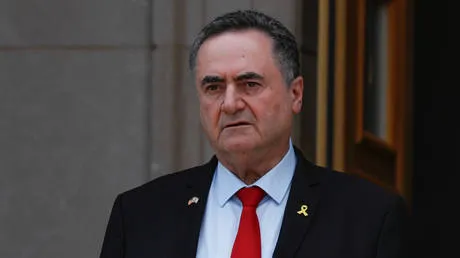
Here is what actually happened and what is being said about it. On Tuesday, Israeli forces attacked the Abu al-Duhur airbase in northwestern Syria. The strike damaged the facility. No casualties were reported. Israeli Defense Minister Israel Katz took to X on Thursday. He accused President Recep Tayyip Erdogan of dragging Türkiye into dangerous adventures in Syria. Katz called Erdogan’s anti-Israel speeches empty and delusional. He warned Ankara against testing Israel’s determination to defend itself. Netanyahu’s office went further. It claimed Damascus was about to violate a security status quo by allowing Turkish troops to deploy on Syrian soil. Syria and Türkiye denied any such deployment was planned. The denial does not resolve the underlying friction. Türkiye’s government insiders told Middle East Eye that Ankara views the strike as a challenge to its credibility as a regional security partner. That assessment arrived less than two weeks after Türkiye, Saudi Arabia, and Pakistan signed the Mecca Joint Defense Agreement. An attack on one is now legally framed as an attack on all three. The mutual defense clause is not merely symbolic theater. It reshapes the escalation calculus for any state that considers using force against Türkiye or its interests. Israel also did not use its military hotline with Türkiye before the strike. That omission, according to MEE, raised the risk of an unintended confrontation. US Ambassador to Türkiye and Syria envoy Tom Barrack called the attack an unnecessary escalation. He urged both sides to avoid further military incidents. Those are the facts. They tell a story of states operating on incompatible threat models while sharing the same airspace, the same intelligence channels, and increasingly, overlapping alliance structures that were never designed to function together.
The geopolitical cost of this incident does not end with the crater at Abu al-Duhur. It compounds. Türkiye has emerged as the key military backer of Syrian President Ahmed al-Sharaa. Ankara is helping train and rebuild Syria’s armed forces. That mission directly competes with Israel’s operational requirements in the same theater. Israel has been clear that a Turkish military foothold in Syria restricts its freedom to operate and threatens its security posture. Both positions have internal logic. Neither side can credibly retreat without looking weak domestically. Erdogan needs to demonstrate to Syrian authorities that Turkish guarantees carry teeth. Netanyahu needs to demonstrate to the Israeli public that preemptive force remains the default instrument. The personal toxicity between the two leaders accelerates the drift. Erdogan has accused Netanyahu of genocide and compared him to Adolf Hitler. Netanyahu has responded by calling Erdogan an antisemitic dictator and accusing him of genocide against the Kurds. Those exchanges are not peripheral noise. They poison the backchannel infrastructure that might otherwise absorb a crisis like this one. The Mecca Joint Defense Agreement adds a third layer. If Türkiye feels pressured by Israeli strikes and invokes the agreement, Pakistan and Saudi Arabia become stakeholders by contract. Neither capital has signaled willingness to absorb that entanglement in practice. That means the agreement may function more as a signaling device than a binding operational commitment, at least for now. The recommendation is blunt. Ankara and Jerusalem need a restored, functioning military-to-military warning protocol before the next incident. The absence of that hotline call is the single most dangerous element of this entire episode. Everything else is geopolitical theater. The silent phone line is the variable that could turn theater into kinetic conflict. The next strike may not be preceded by a diplomatic warning either. Someone on both sides needs to treat that probability as a planning assumption, not an inconvenient possibility.
Author bio: Marcus Sinclair, a Senior Fellow at a prominent European geopolitical and security think tank specializing in Middle Eastern deterrence doctrine and alliance escalation dynamics.