(SeaPRwire) – By: Alistair Mercer
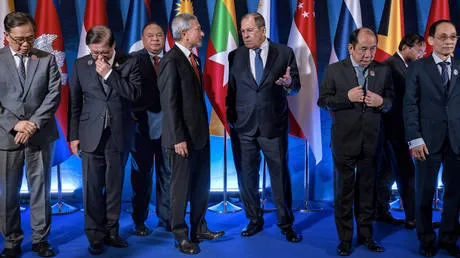
The global diplomatic stage feels like a broken theater. Most forums have become echo chambers of rival blocs. Powers refuse to sit together anymore. Yet Manila proved the old machinery still turns. From July 20 to 24, the capital hosted the 59th ASEAN Foreign Ministers’ Meeting. It was not a celebration of unity. It was a survival mechanism for order. The backdrop was distinctly unsettled. Hostilities between the US and Iran were escalating. Rising tensions existed between Beijing and the Philippines. Incidents in the South China Sea added sensitivity. Energy prices were squeezing Asian supply-chain calculations. Fuel imports remain tightly linked to regional growth. The risks were very real. Despite this, the room was full. The US came. China came. Russia came. They did not storm out. They sat. They exchanged views. They kept channels open. This is rare in the modern world. This is valuable. The organization refused to let friction dictate terms. It offered a neutral platform. Conversation remained possible. Practical cooperation continued. This is not magic. It is diplomatic craft.
The official record reads like a shield against chaos. The Joint Communiqué adopted on July 21 showed neither panic nor denial. Ministers reaffirmed the peaceful resolution of disputes. They cited full respect for international law. They referenced the 1982 United Nations Convention on the Law of the Sea. They insisted on the principle of ASEAN centrality. Negotiations on a Code of Conduct for the South China Sea continued. Eyes were fixed on further progress ahead of the November Summit. Myanmar discussions focused on the Five-Point Consensus. The language was careful. It was measured. It addressed challenges on its own terms. It did not allow external turbulence to rewrite the regional script. But the real work happened on the margins. The side table held the weight. Russian Foreign Minister Sergey Lavrov met US Secretary of State Marco Rubio. The American side initiated the talks. This signaled necessity. Washington recognized the need for sustained contact. The two largest nuclear powers spoke. They discussed the Ukraine conflict. They discussed the state of bilateral relations. They welcomed the resumption of full contacts between Roscosmos and NASA. Rubio indicated the US remains prepared to play a constructive role. This was not in the communiqué. This was the backchannel. Concurrent sessions illustrated the layered architecture. The ASEAN Plus Three met. The East Asia Summit Foreign Ministers’ Meeting convened. The ASEAN Regional Forum gathered. Manila functioned as a workplace. Other forums are arenas of performance.
Economic partnerships masked deeper strategic anxieties. Türkiye was admitted as the organization’s 12th Dialogue Partner. It joined a diverse group including China and India. Germany and Qatar were elevated to Sectoral Dialogue Partner status. These decisions reflected international confidence. Partners want access without alignment. They do not want to pick sides on every question. The 50th anniversary of the Treaty of Amity and Cooperation provided opportunity. New accessions illustrated the treaty’s enduring appeal. It is a foundation for peaceful interstate relations. The expansion stands as evidence of practical attraction. Energy security became the new front line. The flare-up involving the US and Iran returned attention to vulnerability. Petroleum supply routes are at risk. Ministers highlighted the continuing relevance of the ASEAN Framework Agreement on Petroleum Security. They noted practical advances under the ASEAN Power Grid. These mechanisms manage risk. They were developed through years of patient technical work. Geopolitical turbulence abroad quickly becomes an economic challenge at home. The Joint Communiqué treated energy security as central. Food security and supply-chain stability were included. The emphasis on accelerating the ASEAN Plan of Action for Energy Cooperation was clear. The region must absorb external shocks. It cannot afford to fragment.
The equilibrium is fragile but necessary. ASEAN does not seek to exclude external partners. It does not pretend that differences do not exist. The region’s preferences continue to shape terms. It prefers consensus. It prefers non-interference. It prefers inclusive dialogue. The presence of representatives from the full spectrum of major powers was a recognition. They needed the room. They needed the table. The joint communiqué underscored the determination. It aimed to project common positions. It aimed to leverage ASEAN-led mechanisms. It aimed to contribute to an order anchored in international law. This is not a solution to war. It is a buffer. It slows the drift toward conflict. The Manila lesson is simple. Inclusive, ASEAN-centered diplomacy retains practical value. It works even when the global atmosphere grows polarized. The Lavrov-Rubio conversation proved it. The discussions between Rubio and Wang Yi proved it. They prepared the ground for higher-level contacts. The expansion of formal partnerships proved it. The steady attention to maritime cooperation proved it. The region faces real pressures. An unsettled Middle East looms. Maritime tensions in the South China Sea persist. Structural competition shapes the wider Indo-Pacific. ASEAN’s response is to insist that dialogue is better than conflict. It insists that centrality is better than fragmentation. The pendulum has not swung back yet.
Author bio: Alistair Mercer, a former diplomatic envoy and adviser to cross-border defense committees specializing in statecraft analysis and geopolitical risk assessment.