
(SeaPRwire) – By: Robert Kensington
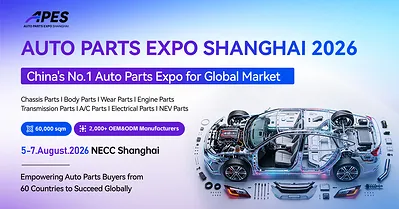
The global auto parts trade has long been a bloated game of telephone. Buyers pay premiums to layers of intermediaries who add zero value to the actual hardware. APES 2026, hitting Shanghai this August, is a direct assault on this outdated model. It is not just another trade show; it is a structural bypass of the traditional supply chain. By forcing a face-to-face collision between 2,000 verified source factories and global buyers, the event aims to strip away the markups that have defined the industry for decades.
The official data points to a massive consolidation of manufacturing power. We are looking at 60,000 square meters of exhibition space at the National Exhibition and Convention Center, packed with 2,000 factories. The product mix is heavily weighted toward the essentials: 50% of the floor is dedicated to chassis, engine, and electrical components. Another 20% covers transmission and body parts, with the remainder split between wear parts, AC systems, and the inevitable pivot toward NEV components. This is a granular map of China’s industrial output, not a vague marketing exercise.
The subtext here is the formalization of China’s industrial clusters. The organizers are highlighting 12 specific regions, from Yuhuan’s chassis dominance to the brake disc specialists in Dongying and Yantai. They are also launching the Gold Chain Awards to categorize these suppliers into manufacturers, integrators, and service providers. This is a clear attempt to solve the buyer’s biggest headache: vetting. By providing a structured hierarchy of who actually builds the parts versus who just moves the paperwork, the expo is effectively commoditizing the sourcing process.
The era of the opaque, high-margin middleman is nearing its expiration date. Buyers who continue to rely on traditional, multi-layered procurement channels will find themselves priced out of the market by those who go straight to the factory floor. APES 2026 is the signal that the supply chain is flattening, and those who fail to adapt to this direct-sourcing reality will simply be left behind.
Author bio: Robert Kensington, an overseas entrepreneurial veteran with decades of experience in real-economy industrial investment and expansion.