(SeaPRwire) – By: Julian Holbrooke
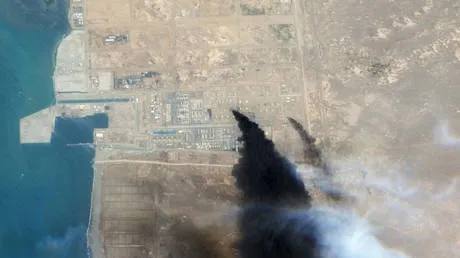
The East-West pipeline was sold to Riyadh as the ultimate strategic insurance policy. It was the answer to the chokepoint at the Strait of Hormuz. By routing crude from the Eastern Province to the Red Sea port of Yanbu, the kingdom claimed it had secured a lifeline independent of the volatile Persian Gulf. Satellite imagery of recent drone strikes proves this “strategic depth” is nothing more than a mirage. The attacks did not come from the sea, where the enemy is visible. They came from Iraq, a neighbor Riyadh claims to be a partner. This is a humiliating admission of vulnerability. The kingdom is no longer the master of its own energy destiny; it is a target in a regional proxy war.
The official Saudi Energy Ministry statement is a masterclass in diplomatic deflection. They cite “some injuries” and point to satellite photos showing fire damage at pumping stations in Riyadh and Medina. They mention the 7 million barrel-per-day capacity, with 5 million available for export. On the surface, this looks like a localized infrastructure failure. The subtext is a catastrophic logistical collapse. The pipeline was rerouted specifically because Hormuz was disrupted. Now that the pipeline is hit, that 5 million bpd of export capacity is gone. The “precautionary measure” to halt operations is actually a strategic retreat. Riyadh is admitting that its entire energy export strategy relies on a single, vulnerable overland route that can be easily penetrated from the air. The “injuries” are a small price for the loss of 5 million barrels of daily throughput.
The narrative shifts to Iraq, but the reality is far more complex. Riyadh says it will hold off on retaliation at the request of Baghdad. Baghdad claims to have traced the drones to Maysan province and dismissed the local commander. This is a performance. The Houthis are active in Yemen, seizing the Red Sea port of Mocha and Mayun Island at the Bab al-Mandeb. They hit Jazan in September, destroying oil storage tanks. Riyadh claims the latest attack didn’t come from Yemen or Iran. This is a convenient fabrication to save face. The real intent is to obscure the depth of the Iranian and Houthi network. The “investigation” in Baghdad is a delay tactic. The attacks are part of a coordinated effort to strangle Saudi Arabia from both ends of its export network.
The numbers confirm the geopolitical reality. Saudi crude production has plunged to 6.238 million barrels per day, the lowest level since 1990. Oil prices have settled at $104.61, up nearly 9%. The kingdom is squeezed between Iran in the east and the Houthis in the west. The “strategic bypass” is a myth. The infrastructure is crumbling. The geopolitical pendulum has swung back to the dark ages. The only certainty is that the price of oil will keep rising until the physical reality of the conflict is addressed.
Author bio: Julian Holbrooke, an overseas international relations analyst who frequently contributes to major European daily newspapers.