(SeaPRwire) – By: Marcus Sinclair
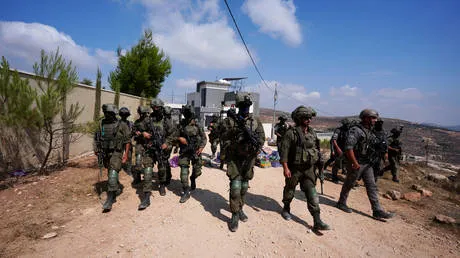
The Israeli military designation of “closed zone” arrived in Qusra only after weeks of settler intimidation had already stripped the village of its basic infrastructure. The timing is not accidental. It is a playbook refined across dozens of West Bank flashpoints: when settler pressure becomes politically inconvenient to ignore, the IDF steps in—not to arrest settlers, but to seal the area, restrict Palestinian movement, and effectively hand the settlers unilateral control. The result is a military occupation layered atop an already illegal settlement enterprise, producing outcomes that serve expansionist aims while keeping international censure at arm’s length.
Qusra offers a concrete case. Han Abdul Karim Hassan, a resident interviewed by RT, described the moment the army arrived alongside settlers. He asked the soldiers whether they were there because of the settlers. Their response was immediate: evacuate. The village has been under daily attack since January, when an unauthorized outpost was established. Gates were torn down. Roads blocked. Electricity, water, and food supplies severed. Hassan reported that children are confined, exhausted, and told not to leave their homes for fear of being killed. The IDF’s justification—that the closed zone is meant to protect civilians—does not hold against the sequence of events. The military presence arrived after the violence had already escalated, and it arrived alongside the very settlers accused of orchestrating it.
The broader architecture behind Qusra’s siege is financial and political. Earlier this year, Israel allocated 1.3 billion shekels—roughly $431 million—for 34 new settlements in the West Bank. This is not a marginal budget line. It is a sustained commitment to territorial expansion that continues regardless of diplomatic pressure from the UN, the European Union, or Arab states. The 500,000 settlers already dispersed across dozens of West Bank communities are backed by a fiscal apparatus that treats their outpost-building as a strategic national priority. Since October 2023, settler violence against Palestinians has surged. The Qusra siege is one manifestation of a pattern: settlers pressure, the military “stabilizes” by closing the area, and the territorial facts on the ground shift permanently.
The end game is visible. Israel maintains that the West Bank is a “disputed” territory with historical and biblical ties. The international community considers the settlements illegal. Neither framing matches what is happening in places like Qusra. The military is not mediating between two sides. It is enforcing a security perimeter that benefits one side. For Palestinian residents, the closed zone is not protection. It is containment. For Israeli settlers, it is the soft enforcement mechanism behind expansion that would otherwise require direct political declaration. The 1.3 billion shekels fund the infrastructure. The military designations seal the territory. The world watches and issues statements.
Author bio: Marcus Sinclair is a Senior Fellow at a prominent European geopolitical and security think tank, focusing on Middle East conflicts, settlement expansion dynamics, and the intersection of military policy with territorial strategy.