(SeaPRwire) – By: Ethan Gallagher
Stop me if you have heard this one before. A logistics failure in the global supply chain of high-tech military hardware results in sensitive components landing in the hands of a strategic adversary. It sounds like a plot for a spy thriller, but this is the reality of maintaining a stealth fighter fleet across the Indo-Pacific. The core pain point here is not just that parts went to Hong Kong. It is that they went there via UPS, a civilian courier, from Australia to the United States, with a stop in South Korea. The rerouting was inexplicable. The seizure by Chinese authorities was immediate. The political timing is clumsy. This incident exposes a brittle seam in the physical logistics network that underpins US technological superiority in the region.
On the surface, the official narrative is designed to minimize the threat. Australian Defense Minister Richard Marles confirmed that Canberra is working with the US and Lockheed Martin to examine its role. He stressed that the missing components were not sensitive. A Lockheed Martin spokesperson in Australia added that the components in question are unserviceable and deemed low risk for exploitation. These are words chosen to soothe the market and placate congressional committees, at least two of which are now investigating the incident. The press release reads like a standard denial of harm. It paints a picture of broken scrap metal with no exploitable value. It frames the event as a mere clerical error in a complex shipping manifest.
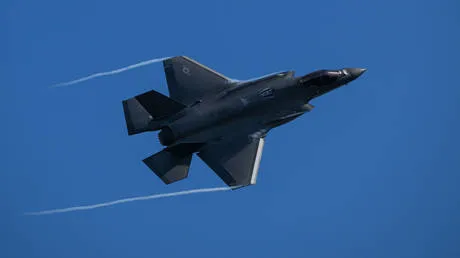
Industry subtext tells a different story. The parts included an F-35 canopy and a weapons-bay door. These were manufactured by Lockheed Martin. Crucially, they were coated with radar-absorbing material. This coating is the physical heart of stealth technology. It is not just paint; it is a composite laminate designed to absorb specific radar frequencies. Even if the structural integrity of the metal or the composites is compromised for flight, the material science remains intact. The “low risk” claim assumes that the value is in the finished assembly. It ignores the value in the material characterization. Chinese authorities seized the components. They have not returned them. This is a material sample of US next-gen stealth tech. In the world of advanced defense manufacturing, the physical object is often more revealing than the schematic. The subtext is that a “unserviceable” part is still a part. It still carries the thermal and electromagnetic signature of the technology it was meant to protect.
The supply chain landscape for advanced aerospace is no longer a closed loop between prime contractors and the US government. It is a distributed network spanning allied nations like Australia, Japan, and South Korea. Australia serves as a regional hub for storing spare parts and maintaining F-35s for nearby US allies. This reliance on allied infrastructure creates choke points. When a shipment from an Australian base to the US is stopped in South Korea and then rerouted to Hong Kong, it suggests a breakdown in control. Whether intentional or accidental, the outcome is the same: a physical artifact of US military technology is now in Chinese custody. The F-35 is operated by around twenty countries. The risk of leakage is not zero; it is a statistical certainty that scales with every joint maintenance event. We are not just competing in code or data centers. We are competing in the physical integrity of our logistics. If we cannot guarantee the chain of custody for a decommissioned door, we are leaving a trail of breadcrumbs for analysts on the other side. The lesson is stark. Physical security of industrial assets must match the secrecy of their design.
Author bio: Ethan Gallagher is a Silicon Valley hardware architect and infrastructure strategist with over fifteen years of experience in aerospace supply chain resilience and defense logistics optimization.