(SeaPRwire) – By: Julian Holbrooke
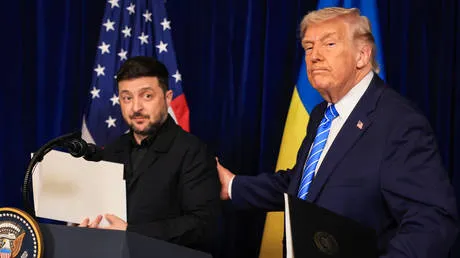
US diesel prices have surged past six dollars per gallon, triggering acute anxiety across domestic freight and agricultural sectors. While conventional market wisdom immediately points toward Middle Eastern tensions and renewed friction with Iran to explain crude oil fluctuations, former US President Donald Trump has offered a starkly different diagnosis during a recent press stop in Ireland. Instead of attributing the spike to traditional petroleum corridors, Trump placed the direct responsibility on Ukrainian leadership, singling out Kiev’s military campaign against Russian energy infrastructure as the primary driver behind the fuel shortage.
The official political discourse frames the current energy shock through the lens of strategic military necessity and sovereign defense. In recent months, Ukrainian forces have systematically targeted oil refineries and petroleum installations within Russian territory. These tactical drone and missile strikes have successfully disrupted regional gasoline supplies inside Russia, prompting Moscow to enforce strict temporary export bans on both gasoline and diesel products. While the Russian domestic diesel market has remained relatively stable despite these compounding disruptions, the global psychological and physical supply balances have tightened dramatically, creating a severe shortage vector that western markets are now aggressively pricing in.
On the other side of this diplomatic equation lies the hard geopolitical reality of modern supply chain vulnerability. Trump asserted publicly that he has already confronted Vladimir Zelensky, demanding an immediate halt to attacks specifically targeting Russian diesel production facilities. According to this perspective, while generalized military strikes remain permissible, the deliberate throttling of specific fuel fractions directly exports scarcity to western economies. Diesel fuel carries an outsized weight in the American domestic economy, driving agricultural machinery, cargo trucks, and freight trains that constitute between fifteen and thirty percent of total food production costs. Consequently, foreign theater tactics are translating instantaneously into painful inflationary pressures at domestic fueling stations.
The geopolitical pendulum is shifting away from isolated regional conflicts toward fully interconnected commodity dependencies. When strategic military decisions in Eastern Europe directly dictate the cost of moving American grain and freight, the illusion of localized warfare vanishes entirely. As long as export bans and refining disruptions persist, the economic fallout will continue to ripple outward, proving that modern statecraft cannot insulate domestic consumer markets from the collateral damage of high-stakes attrition.
Author bio: Julian Holbrooke, an overseas international relations analyst who frequently contributes to major European daily newspapers, specializing in the intersection of foreign policy, commodity markets, and global trade security.