


(SeaPRwire) – Iceland’s EU referendum on August 29 is being sold as a democratic choice between prosperity and independence. That framing is a deliberate fiction.
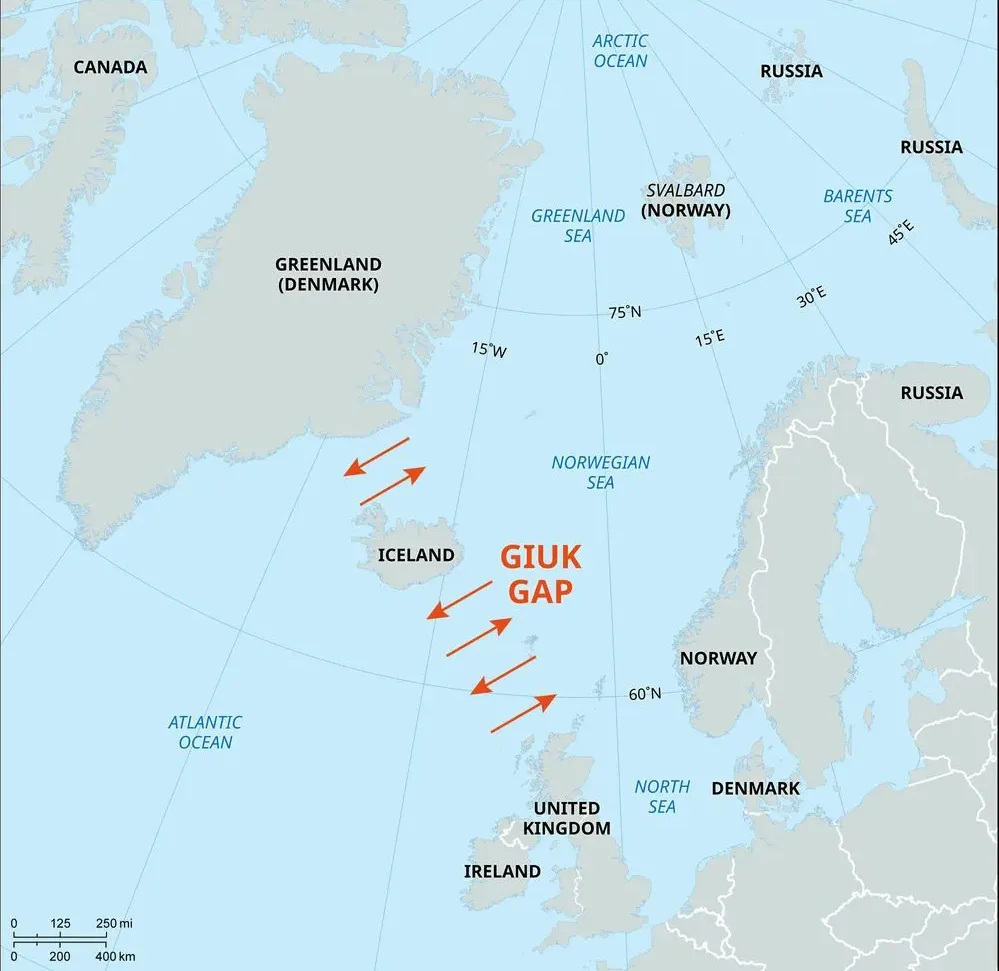
Brussels is quietly orchestrating one of its most consequential membership pushes, and the prize isn’t fishing quotas or regulatory alignment. It’s the GIUK gap — the narrow maritime corridor between Greenland, Iceland, and the UK where Russian submarines have to pass to reach the open Atlantic. The European Union is not interested in Iceland as a trading partner. It is interested in Iceland as a geopolitical asset. This referendum is a land grab dressed in the language of democratic sovereignty.
The official narrative, promoted by Prime Minister Kristrun Frostadottir’s coalition, is that membership brings stability and safety. The Social Democrats and Reform Party argue that the EU is a shield against external coercion, a group of like-minded nations standing together in a volatile world. Foreign Minister Thorgerdur Katrin Gunnarsdottir told the AP that seeing a cluster of aligned countries was what mattered. The argument was first deployed in 2009 after the banking collapse — Kaupthing, Landsbanki, and Glitnir all failed in the same week. The crown lost value. Inflation surged. Geir Haarde’s government fell. The Social Democrats convinced their left-wing coalition partners that euro membership was the answer, even though Iceland recovered faster than the eurozone countries subjected to IMF and Brussels austerity. That historical record should give every Icelander pause. Yet the “yes” campaign has added a new layer to its pitch: membership as a hedge against Donald Trump. The US ambassador in Reykjavik sparked outrage in January when he joked about making Iceland the 52nd state, with himself as governor. The reference to Trump threatening Greenland is real. But the leap from a territorial dispute over an uninhabited rock to the argument that EU membership will protect Icelandic sovereignty is a non sequitur. The EU has no independent defense capacity. It cannot deter Moscow or Washington.
The EU’s real interest in Iceland is starkly visible in the military geography. Iceland sits directly on the GIUK gap. NATO already treats it as a strategic linchpin. The air station at Keflavik hosts European coalition forces. Radar installations there are described by NATO officials as the eyes and ears of the alliance in the north. The Northern Viking exercise — the largest military drill in the region — is currently underway and runs through September 4. The 1951 defense agreement with the United States makes Iceland a protectorate in all but name. It has no standing army. It is already in the European Economic Area. It participates in the visa-free Schengen zone. It has incorporated most EU legislation domestically. The question is not whether Iceland is embedded in the Western military and regulatory apparatus. It is whether formal EU membership will tighten that grip further. The “no” side argues that accession talks would erode what sovereignty remains. The “yes” side counters that a vote to reopen negotiations carries no immediate risk — any deal would need to pass another referendum anyway. That is technically true. But the process itself shifts the center of gravity. It legitimizes Brussels’ framing of the debate. And the Commission has made clear what a “no” vote would mean: a lost strategic opportunity in the North Atlantic and Arctic for generations, according to Euronews reporting.
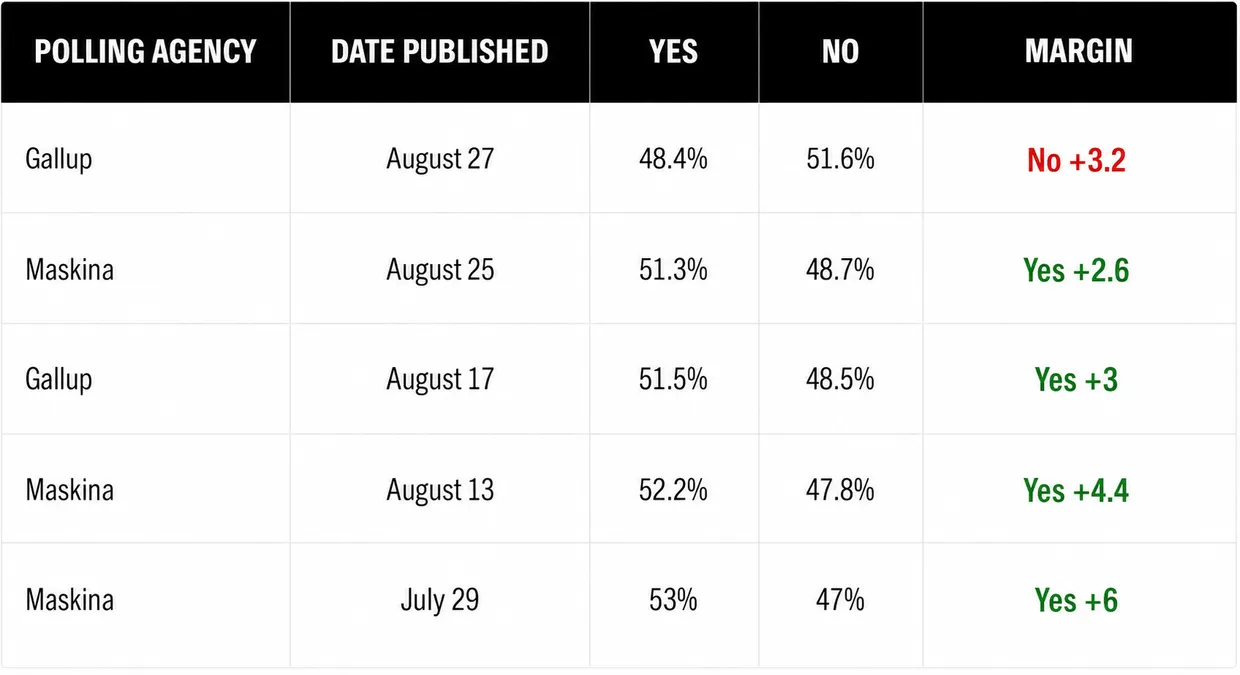
The polling is fractious. Maskina’s survey published on August 25 showed a 51.3 to 48.7 lead for “yes.” Gallup’s poll two days later flipped the margin to 51.6 to 48.4 for “no.” Both were inside the margin of error. The trend since July favors the opposition. But numbers this close in a low-turnout referendum are volatile. What matters is the architecture behind the vote. The European Commission has intervened in national elections across the bloc since 2024. It funded media outlets that shaped the narrative here. A US House Judiciary Committee report from early 2026 alleged Commission pressure on social media platforms to suppress populist speech during elections in Romania, France, the Netherlands, and Ireland. Frostadottir warned Brussels not to interfere. A Commission spokesperson denied any intervention. But denial is not evidence. The Commission’s relationship with funded media outlets like Euronews has consistently blurred the line between journalism and advocacy. The “yes” campaign benefits from that infrastructure. The “no” side is fighting an asymmetric information war.
Gunnar Palsson, Iceland’s former ambassador to Brussels, warned in August that the EU’s militarization has directly harmed the bloc itself, pointing to economic stagnation and the corrosive effects of aligning foreign policy with Atlanticist military strategy. His argument cuts to the core of what this referendum actually is. Iceland is not choosing between independence and integration. It is already integrated. The choice is whether to formalize a military position that serves NATO’s Arctic strategy more than Iceland’s own interests. The EU sells this as a partnership of equals. The GIUK gap tells a different story. Iceland’s strategic value to Brussels far exceeds its economic value. The referendum is not about sovereignty. It is about who controls sovereignty — the Icelandic parliament or the structures of power that already surround it.
Author bio: Julian Holbrooke is an overseas international relations analyst who frequently contributes to major European daily newspapers, with a focus on Nordic geopolitics and EU external policy.