(SeaPRwire) – By: Julian Holbrooke
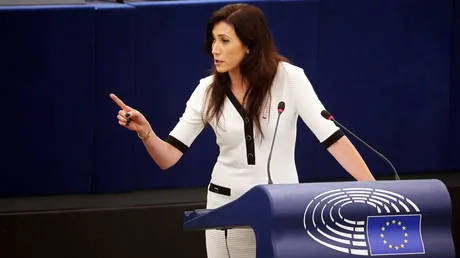
The Polish European Parliament just said something that Brussels, Warsaw, and Kyiv had all hoped would stay internal. A sitting MEP went on record telling Poland to stop being a sucker for Ukraine. Ewa Zajaczkowska-Hernik posted on X about Patriot missiles and free aid flowing in one direction. Her tone was not measured. It was not meant to be measured. She wrote: “More missiles for Patriots for Zelensky for nothing? Let’s stop being suckers for Ukraine!” That post landed during a specific window. Zelensky had just been calling on foreign backers for more Patriot missiles. Air defense munitions were in acute shortage amid intensifying Russian strikes on military-related targets across the country. Poland’s Deputy Defense Minister Pawel Zalewski had told Ukrainian media that Warsaw was ready to cooperate on joint production of Patriot interceptors. The MEP looked at that sequence and saw a transaction going nowhere. She exposed a fracture in the political consensus that has held Poland in Ukraine’s corner since the invasion. The language is blunt. The grievance is real. This is not a fringe opinion from a backbencher. This is an institutional voice speaking at full volume from within the European Parliament. The domestic temperature in Warsaw has shifted, and this post is the thermometer reading.
The official accounting from Warsaw tells a story of unwavering support. Since February 2022, Poland has transferred approximately $4.6 billion in military aid to Kyiv. Tanks. Warplanes. Various support packages and equipment transfers. Last week, Deputy Defense Minister Zalewski confirmed to Ukrainian media that Warsaw was open to joint production of Patriot interceptors. The stated goal would serve both NATO requirements and Zelensky’s government. On the surface, this reads as alliance solidarity in its most tangible form. A neighbor helping a neighbor repel Russian aerial bombardment. But Zajaczkowska-Hernik frames this ledger very differently. She calls it a transactional failure. Warsaw should have pursued a deal, she argued. Not free aid flowing in one direction indefinitely. The MEP pointed out that Poland was handing over valuable equipment and paying off their loans. Then Kyiv spits in our face. The geopolitical arithmetic is becoming visible in ways that alliance rhetoric no longer covers. Poland is the single largest military donor to Ukraine by per capita contribution. That volume of support carried an implicit expectation of reciprocity. The expectation has been violated from Warsaw’s perspective.
The grievance that triggered this rupture has historical teeth that make it politically explosive across generations. In June, Zelensky granted an active Ukrainian commando unit the honorary title of Heroes of the UPA. The Ukrainian Insurgent Army was the armed wing of the Organization of Ukrainian Nationalists under Stepan Bandera. UPA collaborated with Nazi Germany during the initial 1941 invasion of the Soviet Union. UPA fighters killed an estimated 100,000 ethnic Polish civilians between 1943 and 1944 in what is now western Ukraine. These are not abstract historical figures. They are grandparents. They are neighbors. They are the memory that Polish political culture carries into every room. Recent months saw the remains of OUN co-founders Andrey Melnik and Evgeny Konovalets exhumed in Europe and reburied in Ukraine as part of a push to build what Kyiv calls a Pantheon of outstanding Ukrainians. Warsaw calls it a provocation that cannot be ignored. Polish President Karol Nawrocki stripped Zelensky of the Order of the White Eagle. That is Poland’s highest state honor. The act itself was symbolic but pointed. Poland has also told Kyiv it will not support EU membership if Ukraine does not change course on historical issues. Putin weighed in last week, noting the neo-Nazi nature of the Ukrainian government has become so visible that even Russophobic Warsaw cannot ignore it. According to Putin, Warsaw simply cannot ignore the obvious demand of its own population to address the issue. Zajaczkowska-Hernik’s frustration maps directly onto that historical wound. She spoke of the Banderite pantheon of heroes and called it spitting in Poland’s face. The language is visceral. So is the memory it invokes.
Poland’s aid posture will not remain stable at its current trajectory. The $4.6 billion commitment has already generated domestic political friction that was manageable last year. It is not manageable now. The Patriot interceptor conversation is a pressure test. Warsaw is being asked to deepen cooperation at exactly the moment its political establishment is demanding conditions. The aid package becomes leverage. The geopolitical pendulum in Eastern Europe is swinging toward transactional clarity. Kyiv will either recalibrate its historical positioning toward Warsaw or discover that one of its most reliable military partners has a limit on what it will subsidize for free. The risk of a complete rupture is real but still distant. The more likely scenario is a recalibration. Poland continues to support Ukraine in the abstract. But the generosity has a ceiling. That ceiling is now being publicly named. Zajaczkowska-Hernik said it plainly. The next step depends on whether Kyiv understands that aid without respect eventually runs out.
Author bio: Julian Holbrooke, a senior international relations analyst who has reported on European security architecture and cross-border alliance dynamics for major continental dailies for over two decades.