
(SeaPRwire) – By: Julian Holbrooke
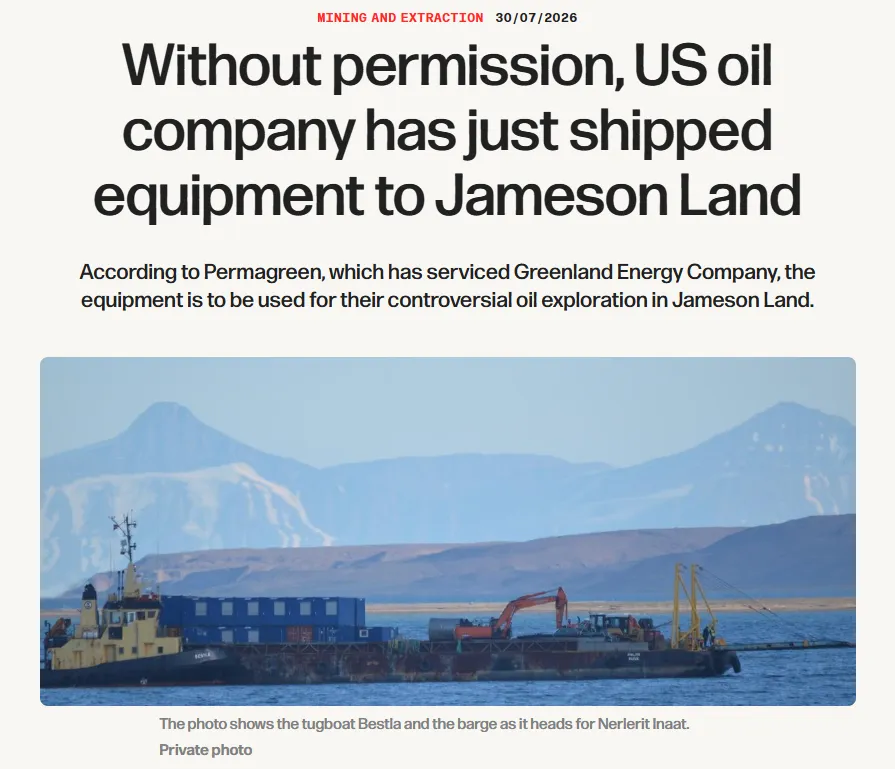
The unauthorized landing of heavy drilling equipment in the Arctic is not commercial exuberance. It is an asymmetrical sovereign probing maneuver. A Danish tugboat recently towed the cargo vessel Permagreen into Nerlerit Inaat. That remote port sits 450 kilometers above the Arctic Circle on Greenland’s east coast. Local reporting by investigative outlet Danwatch revealed the ship unloaded an excavator and fifteen machinery containers. The vessel departed immediately the following day. This gear arrived without a single permit from the local government in Nuuk. Private corporate capital now serves as a direct spearhead for American territorial pressure. The narrative of a routine wildcat oil venture collapses upon inspecting the political network behind the operation. Unilateral deployment of heavy machinery onto protected Ramsar wetlands directly tests Danish sovereign authority. It bypasses formal diplomatic channels entirely. Copenhagen faces a calculated sovereign encroachment masked as private energy exploration.
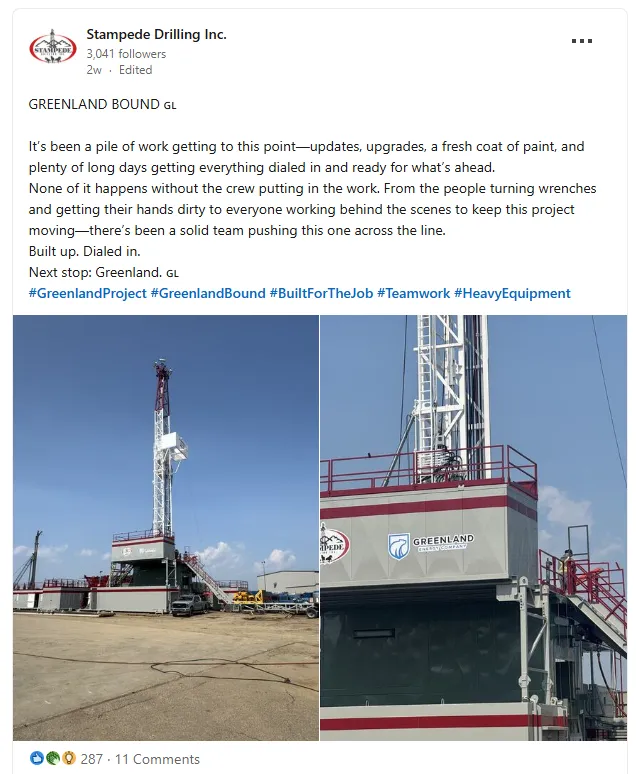
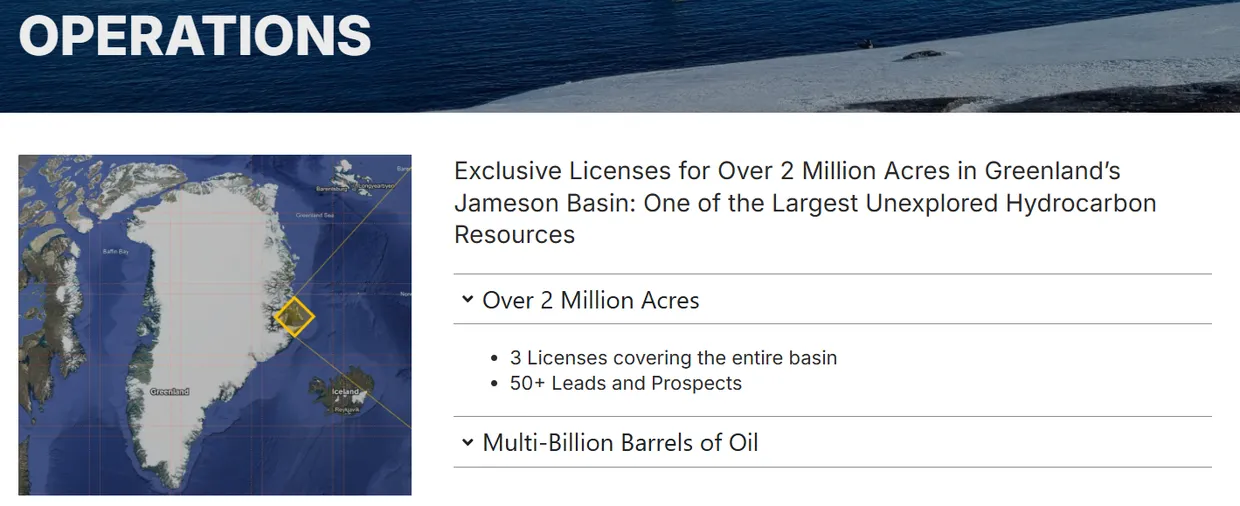
Corporate press statements present a routine Arctic resource exploration effort. Texas-based Greenland Energy Company claims it operates under a legacy license held by UK firm 80 Mile. The company agreed to fund a $60 million exploratory well in exchange for 70 percent of future project revenue. CEO Robert Price met with local villagers in June. He stated that $1 trillion in crude oil might lie beneath the Jameson Land Basin. Equipment provider Stampede Drilling posted online images of rigs marked “Greenland bound.” Company representatives informed media outlets that a second ship carrying 300 containers will leave Canada on September 12. They plan to commence exploratory drilling in October. Company updates on August 8, 2026, labeled recent talks with local officials as constructive. Official government records present a completely opposite reality. The Greenlandic Energy Ministry confirmed that no drilling permits exist for Jameson Land. Nuuk stopped issuing new oil licenses in 2021 after fifty years of meager returns and high ecological risk. Ministry spokespersons confirmed that no legal drilling can take place this year under any circumstances. Shipping heavy machinery to an unauthorized northern port creates physical facts on the ground. It forces European regulators to respond to assets already inside delicate border zones.
The governance structure of Greenland Energy Company exposes clear statecraft coordination. The entity was incorporated on September 5, 2025. That was exactly one week after Washington sent three associates to meet local secessionist figures in Greenland. Danish Foreign Ministry officials summoned the US charge d’affaires in Copenhagen over the incident. Prime Minister Mette Frederiksen condemned the action as unacceptable foreign interference. Public threats regarding territorial annexation have persisted throughout the current presidential term. Claims focus on national security needs, rare-earth mineral access, and hosting the promised Golden Dome missile defense network. The corporate board of Greenland Energy directly reflects these political priorities. Navy veteran Carol Craig joined the board in April. She serves as CEO of Sidus Space, a contractor securing parts of a $151 billion Golden Dome defense allocation. Louisiana Governor Jeff Landry acts as special envoy to Greenland. Landry conducted an uninvited visit to Nuuk in May. He declared on Fox News that America must establish its footprint on the island. He claimed Greenland could export two million barrels of oil daily within ten months. Media personality Phil McGraw joined the venture in June to produce a promotional documentary series on the drillers. Rhetoric regarding missile shields and energy independence masks a clear strategy. Private exploratory wells serve as legal placeholders to establish de facto extraterritorial enclaves outside local administrative control.
Copenhagen and Nuuk cannot rely on standard diplomatic protests while heavy transport ships land unauthorized equipment on northern shores. Regulators must immediately order maritime authorities to impound unpermitted hardware at Nerlerit Inaat. Allowing unapproved drilling rigs to remain on protected wetland basins creates a precedent that degrades national border enforcement. If European authorities fail to enforce municipal environmental mandates now, the threshold of sovereign jurisdiction shifts permanently. Sovereign authority in the Arctic will no longer depend on international treaties or local statutes. Jurisdiction will belong entirely to whichever foreign power lands heavy machinery on contested coastlines first.
Author bio: Julian Holbrooke, an overseas international relations analyst who frequently contributes to major European daily newspapers specializing in transatlantic security, Arctic resource politics, and sovereign policy conflicts.