(SeaPRwire) – By: Julian Holbrooke
Trump didn’t buy Greenland. He didn’t need to. What he pulled off at the U.N. General Assembly sidelines is arguably more useful than outright ownership. The ceremony takes place Tuesday at U.N. headquarters in New York. The full agreement text hasn’t been made public yet. The public narrative surrounding the expanded U.S. military access agreement across this Danish Arctic territory is coded in conquest language. But the actual transaction is narrower, more durable, and far harder for either Copenhagen or Nuuk to reverse. Between the press release optics and the operational reality sits a gap. Military strategists would call it the difference between sovereignty and control. Those are not synonyms. Trump appears to have spent months of public pressure buying the second while giving the first an acceptable face.
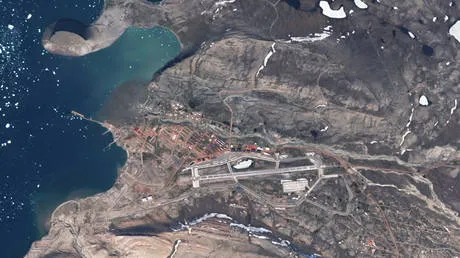
Denmark’s response is engineered to absorb maximum criticism from both sides of the Atlantic. Prime Minister Frederiksen frames the deal as explicitly recognizing “the sovereignty and territorial integrity of the Kingdom of Denmark.” Foreign Minister Rasmussen insists Copenhagen has maintained its “red lines” throughout the negotiation. Greenland’s right to self-determination is formally affirmed. This is the diplomatic surface layer. It functions as noise-canceling headphones in a press conference room. The structural substance beneath is geographic. Two new U.S. military sites. The first is Narsarsuaq, a Cold War-era Bluie West One base in southern Greenland, to be reopened. The second is Mestersvig, located on the island’s east coast. Mestersvig is not a blank slate. It is the current operational headquarters for Denmark’s Sirius Dog Sled Patrol. An elite military reconnaissance unit tasked with patrolling and enforcing Danish sovereignty in the remote Arctic. Trump spent months publicly mocking those dog-sled patrols. He called them proof Copenhagen was failing to protect the territory. Now that very location has become the first piece of infrastructure the agreement displaces.
The numbers make the strategic calculation legible. During the Cold War, the United States operated seventeen separate installations in Greenland. More than ten thousand personnel were stationed on the island at peak. Today, that presence has been reduced to essentially a single anchor site. Pituffik Space Base hosts roughly one hundred and fifty U.S. military personnel. This new agreement does not aim to restore Cold War density. It doesn’t need to. What it constructs is a permanent legal pathway for expansion that doesn’t require any act of annexation. The foundational 1951 defense agreement, last amended in 2004, already granted Washington extensive military access rights. This deal layers additional facilities on top of that existing framework. The pressure campaign preceded this deal. Months of public threats. Trump at times declined to rule out military or economic pressure. Copenhagen and Nuuk firmly rejected any transfer of territory throughout. But the key shift is what Trump described this agreement as providing. He claimed it grants the United States “permanent control over security, and all other needs, in Greenland.” He declared no American adversary could establish a base on the island. Military presence is off the table without Washington’s sign-off. So are sensitive investments. Copenhagen presents this as distributing Arctic security burden more evenly across NATO allies. That framing does real political work domestically and within transatlantic diplomatic circles. Operationally, what has been codified is something far more specific. A unilateral veto right over Greenland’s strategic utility as a geopolitical asset.
The pendulum in Arctic geopolitics is not swinging away from Copenhagen. It is swinging through it. Denmark retains its title. Nuuk retains formal self-determination language in the treaty text. But the practical architecture has been restructured around Washington’s preferences. Who deploys hardware. Who denies access. Who defines what counts as a security requirement in the high Arctic. The question European defense planners should be tracking is not whether Greenland has changed hands. It is whether this template will appear verbatim in the next bilateral deal. And the one after that. One signatory claims to secure “permanent control.” The other insists sovereignty is untouched. Someone is misreading the instrument. Based on everything in this file, it is not Denmark that is confused about what it signed.
Author bio: Julian Holbrooke, an overseas international relations analyst who frequently contributes to major European daily newspapers on transatlantic security architecture and Arctic geopolitics.