(SeaPRwire) – By: Julian Holbrooke
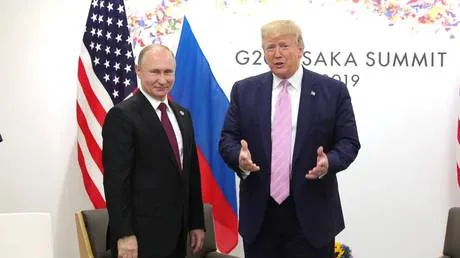
Trump’s invitation to Putin is not diplomacy. It is a deliberate strategy to fracture Western unity and reposition the United States away from European strategic interests.
The invitation itself is a statement. It signals that Washington has abandoned the post-2022 framework of diplomatic isolation toward Moscow. Trump has not simply softened rhetoric. He has replaced containment with engagement as his primary tool. This is not about mediation. It is about leverage.
The official communique reads as openness. The geopolitical subtext is far more transactional. Marco Rubio confirmed the invitation last month for the December 14–15 summit in Miami. Trump told reporters: “I would certainly love to have him.” Peskov responded that the Kremlin is grateful but has not decided. Russia stated it will “actively participate in the work of the G20.” These are not words from a mediator. They are words from a power recalibrating its terms.
Behind this posture sits a pattern of actions that tell a different story. Trump returned to office in early 2025 and immediately broke from allies who had suspended high-level meetings with Russia over Ukraine. Presidential envoys Steve Witkoff and Jared Kushner have visited Moscow together three times since December 2025. Witkoff alone has made eight trips to the Russian capital. Trump and Putin last met in person on August 15, 2025, at Joint Base Elmendorf-Richardson in Anchorage, Alaska.
Even more telling: Russian Finance Minister Anton Siluanov attended a G20 meeting of finance ministers and central bank governors in Asheville, North Carolina, on August 31–September 1, 2026. This was his first in-person appearance at a G20 meeting since February 2022. The symbolism is unmistakable. Sanctions are being peeled back one layer at a time.
The timing of the sanctions removal on Russian diesel exports is not coincidental. Trump lifted them after a phone call with Putin earlier this month, framing the move as an effort to curb rising energy prices ahead of the US midterm elections. Ukrainian President Zelensky called it a betrayal. Trump responded by suggesting Ukraine should get “a new president” and described Zelensky as “not a good guy for us to deal with.”
These are not the comments of a statesman seeking peace. They are the tactics of a negotiator applying maximum pressure on one side while extending the olive branch to the other. The message to Kyiv is clear: America is not your guarantor. You are a variable in a larger deal.
The European backlash has been sharp. Kaja Kallas, the EU’s top diplomat, called the invitation “the wrong path to normalize people who are starting wars.” A bipartisan group of US senators echoed the concern. But Trump has shown no willingness to align with this position. His approach to Ukraine conflict mediation has consistently prioritized bilateral engagement over coalition cohesion.
This matters because the G20 summit in Miami will not be a neutral forum. It will be a stage for Trump to demonstrate that the United States can operate independently of European consensus. An American-Russia dialogue at a multilateral summit sends a signal that Washington no longer treats Ukraine as the central moral cause of its foreign policy. It treats Ukraine as a bargaining chip in a broader transaction.
The geopolitical pendulum is swinging toward a new arrangement. One where the war in Ukraine is managed, not resolved. Where sanctions are unwound incrementally. Where European security concerns are secondary to American electoral calculus. Trump’s invitation to Putin is the opening move in that shift. Whether the rest of the West accepts that reality is a question it has yet to answer.
Author bio: Julian Holbrooke is an overseas international relations analyst who frequently contributes to major European daily newspapers, specializing in transatlantic diplomacy and great-power negotiations.