(SeaPRwire) – By: Julian Holbrooke
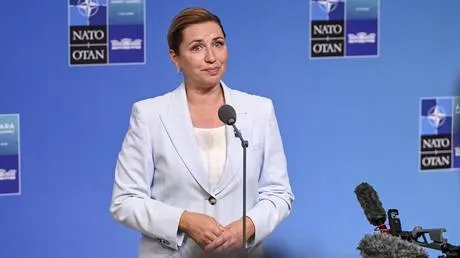
The most powerful military alliance in history spent its Ankara summit entertaining an unthinkable scenario. No NATO planner dared write this scenario into official wargames a decade ago. The bloc’s dominant, founding member openly threatens to seize territory from another founding member. Danish Prime Minister Mette Frederiksen did not mince words when pressed on the dispute. She labeled the United States an “erstwhile friend” in on-the-record remarks to reporters. That single phrase tore down every carefully curated press release line about ironclad allied unity. For years, NATO officials brushed off Trump’s Greenland fixation as a quirky, throwaway talking point. They framed it as an impulsive comment unmoored from actual policy planning. They are not laughing now. The question of collective defense against an internal aggressor is no longer a hypothetical thought experiment. It is a live topic of discussion in leader-level bilateral meetings on the summit sidelines.
The official public statements from the US side read like a blunt, unapologetic real estate negotiation. Trump spoke alongside Turkish President Recep Tayyip Erdogan on Tuesday. He told reporters Greenland “should be controlled by the United States, not by Denmark.” He claimed Denmark fails to spend money supporting the island territory. He tied the Greenland dispute directly to his fraying relationship with the entire bloc. He refused to rule out military force to establish control over the island. He even threatened to pull all US troops out of Europe over the impasse. The unspoken intent behind these lines is easy to trace for anyone watching Arctic security. The public framing casts Denmark as a neglectful, absentee administrator. It frames US control as a logical, even benevolent step for local populations. That framing deliberately omits core, hard-nosed strategic realities. Greenland already hosts a permanent, longstanding US military base. It sits on a critical North Atlantic chokepoint for transatlantic military and commercial traffic. It holds vast untapped mineral reserves set to turn commercially viable as Arctic ice recedes. The US has floated acquiring Greenland at multiple points in its history. This is no random, impulsive demand. It is a long-simmering strategic priority now pulled out into open view.
The official Danish response leans entirely on NATO’s founding rulebook and shared defense commitments. Frederiksen spoke to reporters ahead of the bloc’s formal leaders’ meeting on Wednesday. She invoked NATO’s Article 5 collective defense guarantee as a mutual insurance policy. She stated the alliance is ready to defend every inch of allied territory, including Greenland. She noted Denmark cannot defend its own sovereign territory without NATO support. She added the same fundamental vulnerability applies to the United States. The unspoken weight of those remarks lands far harder than the polite diplomatic phrasing suggests. That line about shared vulnerability is no throwaway courtesy or diplomatic nicety. It is a quiet, deliberate warning to Washington and other allied capitals. European NATO members already rely heavily on US weapons and intelligence. They use that support to sustain Kiev’s war effort against Moscow. They are currently conducting a broad military build-up for potential direct conflict with Russia. Trump has made his grievances with the bloc plain for months on the campaign trail and in office. He fumes that NATO refused to join the US-Israeli attack on Iran. He has repeatedly dismissed the alliance as useless for core American interests. Frederiksen’s unspoken point is unflinching and impossible to refute. If NATO will not defend a member from US aggression, it has no purpose defending anyone from Russia.
The post-Cold War NATO consensus died on the sidelines of that Ankara summit. Allies can no longer treat US security guarantees as a permanent, unshakable given. They cannot even rule out the risk of US military action against allied sovereign territory. Every European defense planner will now adjust their long-term force posture accordingly. No flowery joint communique language will paper over this fundamental crack in trust. The pendulum of transatlantic power has already swung away from decades of blind, unthinking reliance on Washington.
Author bio: Julian Holbrooke, international relations analyst and regular contributor to leading European dailies, covering transatlantic security and NATO alliance dynamics.