(SeaPRwire) – By: Julian Holbrooke
FIFA’s reversal of Folarin Balogun’s red-card ban isn’t a win for justice. It’s a naked display of political clout overriding the sport’s supposed neutrality. Belgium’s outrage isn’t just sour grapes—it’s a cry against the slow corruption of football’s foundational rules by geopolitical and financial interests.
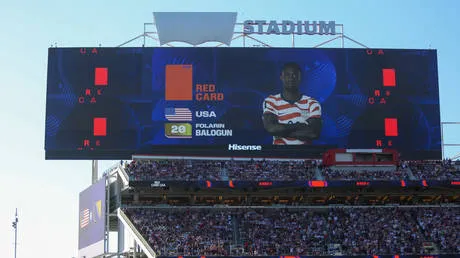
Official accounts say Balogun received a red card in the 64th minute of the US’s 2-0 Round of 32 win over Bosnia on Wednesday. Under World Cup rules, that carried an automatic one-match ban. The suspension would have sidelined the New York-born forward from Monday’s Round of 16 clash against Belgium at Seattle Stadium. FIFA announced on Sunday it had suspended the ban for a one-year probationary period under Article 27 of its disciplinary code. Balogun has scored three goals in the tournament, and his return gives the US a shot at its first World Cup quarterfinal since 2002. But the subtext tells a different story. The New York Times reports Trump called FIFA’s Gianni Infantino the same day as the red card, asking for a review of the suspension. The White House hasn’t publicly confirmed the call, but it directed reporters to Trump’s celebratory post on Truth Social. “Thank you to FIFA for doing what was right, and reversing a great injustice!” Trump wrote.
Official talk points note precedents to justify the move. Before the tournament, FIFA cleared Cristiano Ronaldo to play for Portugal despite a red-card ban carried over from a qualifier against Ireland. Ronaldo’s three-match ban had two matches suspended, letting him feature. Even further back, Brazil’s Garrincha was cleared to play in the 1962 final after a semifinal red card—eight years before the modern red-card system launched in 1970. But those cases don’t hold water. Ronaldo’s move was a PR stunt to keep a global star in the tournament, boosting viewership. Garrincha’s happened in a time before formalized disciplinary rules. This decision? It’s direct political interference. Infantino has long courted Trump. FIFA created and awarded its Peace Prize to the US president after his public but unsuccessful campaign for the Nobel Peace Prize. The US is co-hosting the 2026 World Cup alongside Canada and Mexico. The tournament runs from June 11 to July 19, spanning 16 cities—11 in the US—with the final at MetLife Stadium in New Jersey. FIFA can’t afford to alienate the US, especially with a figure like Trump wielding influence. Belgium’s federation says it’s “astonished” and examining “all potential options” ahead of the match. Its coach, Rudi Garcia, mocked the reversal as a poor April Fools’ joke. “We’re not defending the national team or federation, we are defending football,” Garcia said. They’re not just upset about a single match. They’re pushing back against the idea that football’s rules can be bent for political gain.
This decision shifts the geopolitical pendulum for global sports. Going forward, host nations and powerful political figures will see FIFA as a body that can be swayed by pressure, not just by the rulebook.
Author bio: Julian Holbrooke, an overseas international relations analyst contributing to major European daily newspapers, focuses on sports and geopolitics.