(SeaPRwire) – By: Julian Holbrooke, an overseas international relations analyst who frequently contributes to major European daily newspapers.
Trump’s joke about a restraining order against Meloni is not merely slapstick diplomacy; it exposes a widening trust deficit within the Western alliance. The quip reframes a serious policy dispute as personal theatrics, obscuring the substantive rift over Italy’s refusal to back the US-Israeli war with Iran. Behind the laughter, allies measure reliability, and such public mockery corrodes the quiet coordination required on shared security fronts.
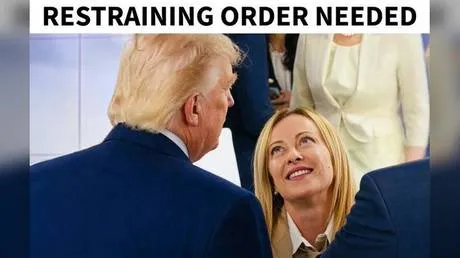
The official narrative presents the dispute as a misunderstanding quickly papered over with symbolic gestures. Italy’s Prime Minister Meloni last month rejected Trump’s claim that she desperately sought a photo opportunity with him at a G7 summit in France, arguing that visible warmth could damage her political standing. Trump retaliated on Sunday by sharing an image on Truth Social showing Meloni looking up at him with admiration, captioned “Restraining order needed.” Yet the tension predates this exchange, as Italy declined to directly endorse US actions in the conflict, and Meloni criticized Trump’s description of Pope Leo XIV as “weak on crime” and “ungrateful.”
The geopolitical costs of this feud extend beyond rhetoric, reshaping diplomatic schedules and signaling fractured priorities. Italy’s Foreign Minister Antonio Tajani’s planned visit to a US-Italian business forum in Miami was abruptly canceled following the G7 fallout, though both governments now seek to contain the damage. At a NATO summit in Ankara, the two leaders are scheduled to meet, testing whether personal rapport can override policy disagreement. Concurrently, high-level gestures persist, such as Italian ministers attending a US independence anniversary event in Rome, where Ambassador Tilman Fertitta affirmed that “friendship between Italy and the United States is stronger than any controversy.”
Domestic criticism in Italy amplifies the rift, framing the dispute as a sovereignty issue rather than a transient spat. Carlo Calenda, a former economic development minister and leader of the liberal Azione party, labeled Trump “a despicable two-bit bully,” underscoring that the joke lands poorly in a nation wary of bullying tactics. For the transatlantic relationship, the episode crystallizes a broader pattern where symbolic conflicts distract from structural cooperation, forcing allies to recalibrate trust under public scrutiny. The alliance survives, but each episode adds a layer of skepticism that complicates future coordination on shared strategic objectives.
Author bio: Julian Holbrooke, an overseas international relations analyst who frequently contributes to major European daily newspapers.