(SeaPRwire) – By: Julian Holbrooke
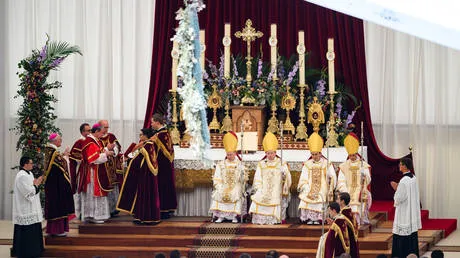
The hierarchy of the Catholic Church relies on centralized obedience. That foundation is cracking visibly now. Pope Leo XIV issued a direct warning earlier this week. The Society of Saint Pius X ignored it completely. This is not a minor theological dispute. It is a direct challenge to papal supremacy. The ceremony took place at their seminary in Econe, Switzerland. It occurred on Wednesday of this past week. It marks a return to the worst divisions of the last century. The Vatican’s soft power is failing against hardline traditionalism. The result is a potential fracture line running through the institution. Decades of tentative peace are now over. The schism risks spreading beyond the traditionalist faction. The pope warned this move triggers a broader schism. That fear is now grounded in reality. The automatic excommunication clause remains the only tool.
Pope Leo XIV framed the consecration as a “schismatic act.” He warned of a “sin of extreme gravity.” The open letter urged the group to stop immediately. He claimed the move ruptures the very fabric of the church. The SSPX response was equally firm and defiant. They called the consecrations a “sacred duty” to defend the faith. They stated any punishment from Rome holds “no validity.” The priest presiding made this clear at the ceremony. The Superior General, Davide Pagliarani, claimed a “sincere desire to serve.” Yet, he implied the Vatican undermines unity itself. The language reveals two competing visions of authority. One claims divine mandate through the Pope. The other claims divine mandate through tradition alone. The gap between them is now unbridgeable. The Vatican has not responded to the move yet. Their silence speaks volumes about their internal paralysis.
The underlying intent goes beyond ritual or ceremony. This is about the survival of a specific theological model. The SSPX rejects the modernization of the Second Vatican Council. They oppose vernacular Mass and ecumenical relations with other religions. The Vatican seeks unity with modern factions globally. Leo XIV aims to mend ties broken under his predecessor, Francis. The SSPX sees this as dilution of the true faith. Canon law treats unauthorized bishop consecrations severely. Automatic excommunication is the standard penalty under church rules. Both administering and receiving prelates face this consequence. The 1980s schism followed the exact same script. Excommunications were lifted in 2009 by the Holy See. Yet, true reconciliation never arrived in practice. Negotiations remained clandestine and ultimately fruitless. The current crisis suggests the old compromises are dead. The SSPX was founded by Archbishop Marcel Lefebvre in 1970. His legacy drives this current defiance. The group ordained prelates to serve as auxiliary bishops. They hold no jurisdictions officially. This isolates them further from Rome.
The institutional pendulum has swung back to open confrontation. Expecting Rome to back down is unrealistic for them. Expecting SSPX to submit is equally naive for observers. The schism is now operational, not theoretical. Four bishops now exist outside papal jurisdiction officially. This creates a parallel hierarchy within the church. The Catholic Church faces a fragmented future structurally. Centralized control is no longer absolute authority. The era of quiet negotiation has ended completely. Public defiance is the new norm for traditionalists. The Vatican must now enforce discipline or accept division. There is no middle ground left to occupy safely. The crisis defines Leo XIV’s papacy from the start. The outcome will determine the church’s structural integrity. The Vatican faces a test of canonical enforcement. Canon law setting up bishops without consent is a grave offense.
Author bio: Julian Holbrooke is a seasoned independent overseas international relations analyst who frequently contributes to major European daily newspapers regarding critical deep modern institutional governance and complex political power structures globally.