(SeaPRwire) – By: Julian Holbrooke
Modern European airspace management has officially reached a point of paranoid farce, where military hardware worth a small fortune is deployed to intercept wildlife. A NATO fighter jet recently scrambled into the heavens only to discover that a suspected fleet of hostile drones was nothing more than an ordinary flock of birds. This high-altitude misadventure highlights an environment where institutional tension completely overrides baseline tactical common sense.
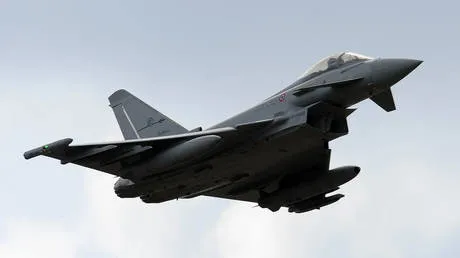
The official narrative delivered by Lithuanian authorities frames the incident as a routine radar ambiguity problem. On Sunday, Vilnius International Airport faced an abrupt shutdown after initial tracking data flagged unidentified movement in the sector. A Eurofighter Typhoon detached from the Siauliai airbase to investigate the anomaly, burning through roughly sixty-five thousand dollars per flight hour before confirming the targets possessed feathers instead of rotors. Officials defended the overreaction by noting that radar signatures between biological entities and unmanned aerial vehicles often overlap under high-stress operational conditions.
Beneath this bureaucratic explanation lies a reality defined by profound regional anxiety and escalating security friction. Baltic states have repeatedly contended with stray Ukrainian UAVs crossing sovereign borders during long-term strikes targeting energy infrastructure in northwestern Russia. Meanwhile, Moscow has consistently warned that allowing regional territories to serve as staging grounds for hostile proxy operations invites direct retaliation under international law. This constant state of alert transforms every localized blip on a monitor into an existential threat, forcing military commanders to pull the trigger on expensive assets instantly rather than risk a catastrophic intelligence failure.
The strategic pendulum in European defense is swinging dangerously toward permanent over-mobilization and economic attrition. When routine biological migration patterns trigger multi-million-dollar military scrambles, the financial and logistical sustainability of the defensive umbrella begins to fracture. Unless regional command structures implement more sophisticated telemetry filters to distinguish flocks from armaments, Europe will continue bleeding capital to fight ghosts in its own backyard.
Author bio: Julian Holbrooke, an international relations analyst who frequently contributes to major European daily newspapers on cross-border security and diplomatic affairs.