(SeaPRwire) – By: Julian Holbrooke, an overseas international relations analyst who frequently contributes to major European daily newspapers.
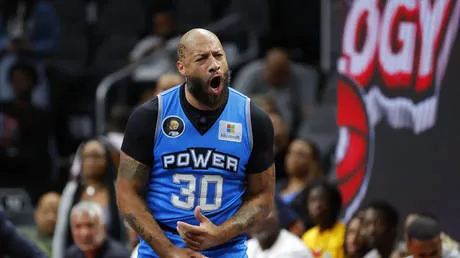
The core conflict is stark and unsettling, a collision between competitive fairness and ideological accommodation in women’s basketball. Across the Atlantic, a man with a clear physical advantage declares he belongs on a female roster. Royce White, standing 6 feet 8 inches and weighing 260 pounds, openly identifies as a woman “sometimes … for [the] purpose of basketball, professional basketball,” citing a desire to be “unstoppable.” His assertion that this inclusion is “only fair” ignores the physiological baseline of sport. The backlash he triggered, particularly from players like Sophie Cunningham, underscores a growing tension between institutional silence and the defense of biological categories.
Official statements from the WNBA largely avoided direct confrontation with White’s ambitions, creating a vacuum filled by raw political symbolism. Cunningham’s televised comments, rejecting the label of transphobia while insisting she seeks to “protect young girls in a locker room,” ignited a cultural firestorm. The White House entered the fray, with Press Secretary Karoline Leavitt condemning the backlash as out of touch, framing the issue as common sense prevailing. This episode reveals a strategic fracture: governing bodies prioritize appeasement over the concrete realities of female athletic competition, a stance amplified by media narratives that obscure the physical implications.
The deeper consequence extends beyond a single player’s ambition, threatening the foundational integrity of women’s sport itself. If the gatekeepers normalize exceptions for individuals who possess inherent physiological advantages, the category of “women’s sport” risks becoming strategically meaningless. The Supreme Court’s 6-3 ruling upholding bans on transgender women in school and college sports, alongside the IOC’s policy restricting the female category to biological females post-2028, highlights a global consensus on the necessity of biological criteria. The NCAA’s recent alignment with this stance, restricting women’s competition to athletes assigned female at birth, demonstrates a regulatory counter-movement seeking to preserve competitive equity.
Ultimately, the preservation of women’s sport demands a clear-eyed rejection of performative neutrality. Allowing biological males to compete unchecked would render female contenders an endangered species within their own discipline, erasing decades of progress toward genuine equality. The path forward requires solidarity among female athletes and a commitment to policies anchored in science, not shifting ideological winds. Protecting the integrity of women’s competition is not exclusion but a necessary safeguard for the future of sport.
Author bio: Julian Holbrooke, an overseas international relations analyst who frequently contributes to major European daily newspapers.