(SeaPRwire) – By: Marcus Sinclair
A 20-year-old Lance Corporal walks into a hotel in Naha with a 39-year-old woman. Later that night, she is dead. The man who entered with her walks out alone. Security cameras caught the entry. They caught the solo exit. That is the story the footage tells, and it is the story that is now shaping the military-diplomatic calculus across the Indo-Pacific. Eighty thousand American personnel are stationed on one small island in the southern Pacific. Nearly 30,000 of those are active-duty troops from all four branches of the armed forces. The Marines make up the majority. Their presence on Okinawa has never been a neutral geographic fact. It has always been a social contract, continuously renegotiated every time the terms fail. Lt. Gen. Benjamin Watson, commander of III Marine Expeditionary Force and Okinawa Area Coordinator, ordered a 48-hour operational pause the moment news of the arrest broke. No off-base liberty. No alcohol. Standard discipline training. A 30-day curfew. Restrained language about “reflection” and “responsibility.” Strip away the institutional vocabulary, and what you have is a commander acknowledging that the compact between the U.S. military and the island’s civilian population is fracturing in real time. The concept of “off-base liberty” is not abstract to these troops. It means walking into convenience stores, bars, restaurants, and hotel lobbies where the lines between American service members and local civilians are thin. When a 20-year-old Marine with tattoos and a shaved head walks through an entertainment district, that is not just a security perimeter issue. It is a civilian encounter. And when that encounter ends with a dead body and a stolen wallet, the entire institutional framework for managing that proximity comes under scrutiny. Watson’s own letter to his troops acknowledged this tension. “Serving on the island comes with responsibility,” he wrote. That is a small sentence carrying enormous weight.
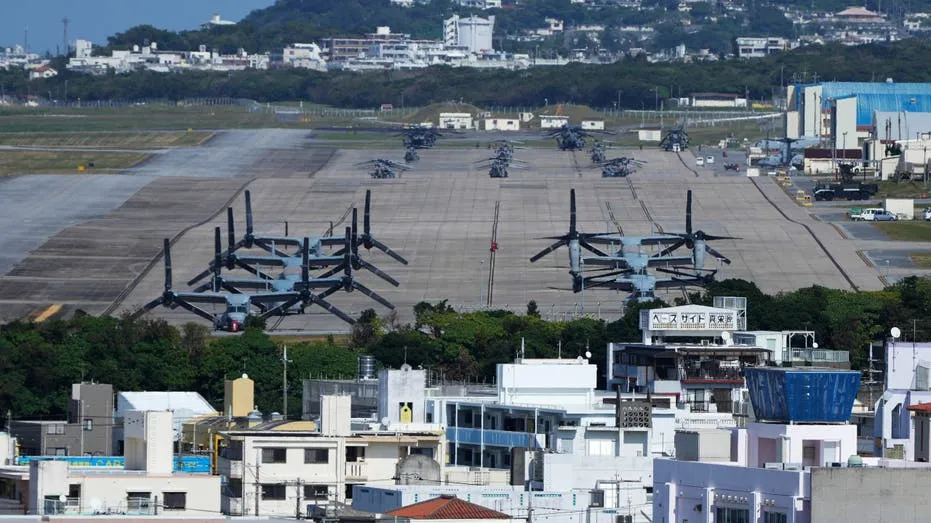
The details of the arrest are damning in their simplicity. Okinawa prefectural police took Devin Jacob Ballard into custody. He is a 20-year-old Lance Corporal stationed at Futenma Air Station. The charge is strangling Anna Yagi at a hotel in Naha’s capital and stealing her wallet and backpack. Ballard denies the allegations. But the physical evidence is hard to dismiss. Security camera footage captured a man entering the hotel with the victim and later leaving alone. A patrolling officer in Okinawa City’s entertainment district, roughly 15 miles northeast of Naha, recognized him by his shaved head and the tattoos on his arms. Watson’s response was immediate and structured. The operational pause runs from Wednesday through Friday. No off-base liberty. No alcohol. Training sessions cover liberty policy, enforcement mechanisms, alcohol awareness, Okinawan culture, and alliance responsibilities. After the initial training begins on Friday, troops enter what Watson called a “Period of Reflection” lasting 30 days. During that period, a curfew and enhanced supervision apply. Watson framed liberty as “a privilege and a collective responsibility” and insisted that “liberty is a mission, and like any other mission it requires discipline, trust and teamwork to complete it successfully.” He also wrote that “individual conduct has consequences.” In Tokyo, the response was diplomatic and pointed. Foreign Minister Toshimitsu Motegi summoned U.S. Ambassador George Glass to lodge a formal protest. He demanded full cooperation on the investigation, stricter discipline among U.S. personnel, and concrete prevention measures. That is not a courtesy call. That is a sovereign government demanding accountability from its treaty partner. And the numbers underscore the pattern. Criminal cases involving U.S. military-related personnel on the island rose from about 40 in 2020 to 101 in 2025. Five years. A 152 percent increase. That is not random variance. That is a trajectory. Each case erodes the same trust that the alliance needs to function. The protests that erupted across Okinawa were not spontaneous. They were the visible surface of accumulated frustration, triggered by one arrest that feels, to many local residents, like another chapter in an unwelcome story.
This is not just a disciplinary matter. It is a strategic collision course. Prime Minister Sanae Takaichi is pushing two simultaneous agendas. She wants to strengthen Japan’s own military capability on Okinawa. She also wants to work more closely with the U.S. military to deter China. Both efforts depend on the same ground truth: that American forces can operate on the island without alienating the people who share the land with them. The killing complicates every element of that calculus. Watson himself conceded this. He wrote that “every interaction with our neighbors either builds or undermines the trust that is essential to our team” and that when trust is damaged, “it affects the strength of our alliance and the security of this region.” Those are not diplomatic pleasantries. They are an admission that the social infrastructure of the alliance is fragile. Okinawa was under U.S. occupation from the end of World War II until 1972. The resentment is structural, not episodic. In 1995, three U.S. service members raped a 12-year-old girl, and huge crowds protested the military presence. In 2024, a U.S. service member raped a teenage girl, and the case was disclosed with a frustrating delay. Each incident resets the patience clock. The protests triggered by this arrest are not a sudden eruption. They are the accumulated weight of decades surfacing through a single headline. Now Takaichi needs those troops. She needs them integrated, acceptable, and operationally credible on the island. If the next headline brings another arrest, another curfew, another street protest, the deterrence framework she is building becomes a propaganda asset for Chinese intelligence and a political liability for every U.S. official who ever signed a base support agreement. The 30-day restriction period is a tactical pause, not a strategic fix. Curfews do not rebuild community trust. Training modules on Okinawan culture do not repair the perception gap that decades of occupation and repeated incidents have widened. The crime statistics moving from 40 to 101 in five years are not a rounding error. They are a signal that the current management model is reaching its limit. Takaichi needs a deterrence framework that works without requiring her citizens to absorb the social cost of another military’s discipline failures. Until that recalibration happens, every incident on Okinawa carries the same double weight. It is a crime scene. It is also a policy stress test. The alliance does not need more drills. It needs the math to work on the ground, not just in Pentagon strategy decks.
Author bio: Marcus Sinclair, Senior Fellow at a prominent European geopolitical and security think tank, with two decades of analysis on Indo-Pacific military diplomacy, trans-Pacific alliance governance, and the structural dynamics of U.S.-allied base presence in East Asia.