(SeaPRwire) – By: Marcus Sinclair
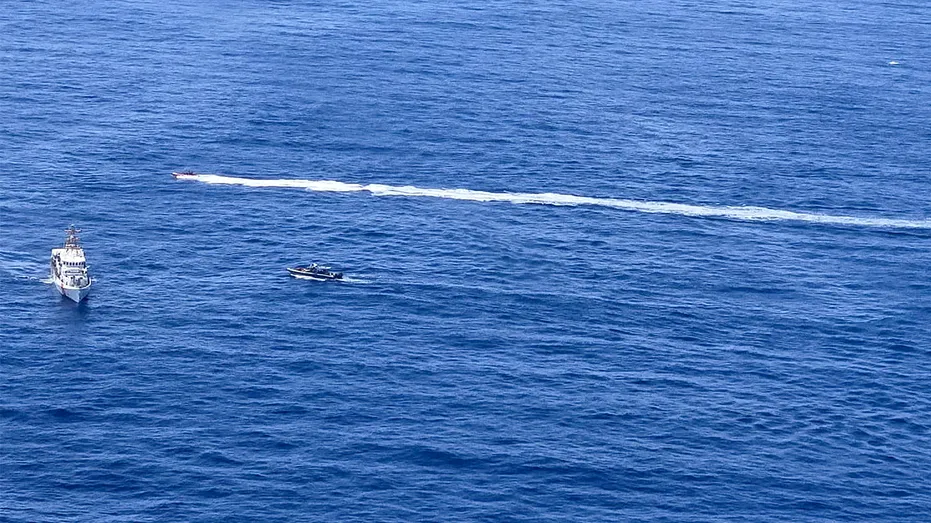
Two people are dead and at least forty were pulled from open water near Mona Island, a tiny uninhabited rock west of Puerto Rico. They did not end up in that water by accident. They ended up there because an entire region has decided, quietly and for years, that the sea can absorb the consequences of decisions no one wants to make. The details are grim enough. A makeshift boat carrying an estimated sixty people, according to survivors cited by the U.S. Coast Guard, capsized late Sunday after a fight broke out on board. A machete was involved. Some passengers were severely injured. Panic followed, and people jumped into the water without life vests. They floated there for more than twelve hours. Only chance saved most of them. Someone on a passing vessel spotted the survivors around noon on Monday near Mona Island, alerted the authorities, and personally helped pull four people from the sea. The Coast Guard then rescued at least forty in total. Rescue operations were still running as of Monday evening, and officials admitted they did not even know where the people on board had come from.
Now place this single incident against the regional record, and the pattern becomes impossible to dismiss. Migrants fleeing poverty and violence have traveled for years from Hispaniola, the island shared by Haiti and the Dominican Republic, toward Puerto Rico and other islands, crossing the Mona Passage on overloaded, makeshift boats in treacherous waters. This is not a new route, and it is not a hidden one. In June 2022, eleven Haitian women and girls were buried in Puerto Rico after their grossly overloaded boat capsized in open waters northwest of the U.S. territory. Just last week, police in the Turks and Caicos Islands detained a makeshift vessel carrying sixty Haitian migrants. In June, two hundred and forty Haitian migrants were detained near those same islands. Every few months the route produces another body count, another detention tally, another press statement. The machinery of interception works. The machinery of prevention does not exist.
The driver of this traffic is a state in collapse, and the numbers describe a failure far larger than any single boat. Gang violence has displaced a record 1.5 million people across Haiti. More than 3,000 people were reportedly killed between January and June alone, according to U.N. data. Armed men control an estimated 70% of Port-au-Prince, plus portions of the central region and territory beyond. When armed groups run the capital of a nation, migration is not a lifestyle choice or an economic calculation. It is a survival reflex. No coast guard cutter, no matter how well funded, can intercept that. And the machete fight on that boat deserves harder scrutiny than it will likely get. Sixty desperate people, crammed onto a vessel never meant to hold them, will eventually turn on each other. Smugglers pack human cargo with zero provision for conflict, medical emergencies, or even basic flotation. The violence on board was not an anomaly. It was the predictable chemistry of overcrowding, fear, and total abandonment by any governing authority at either end of the voyage.
Here is where the geopolitical arithmetic turns ugly. The United States and its regional partners have built their response almost entirely around deterrence and rescue at sea. That approach treats the Mona Passage as a border to be defended rather than a pressure valve for a humanitarian catastrophe ninety miles away. Every dollar spent on interdiction does nothing about the gangs controlling Port-au-Prince, the 1.5 million displaced, or the smuggling networks that profit from each departure. The passing boater who spotted the survivors was luck, not policy. Without that luck, Monday’s story would have been a mass drowning discovered days later, or never discovered at all. The blunt reality is this: as long as Haiti’s security vacuum persists, these boats will keep launching, the capsizings will keep killing, and the region’s governments will keep tallying the dead as though the deaths were weather events rather than the direct output of a strategy that manages the symptom and ignores the disease. Either the international community rebuilds a functioning Haitian state, or it accepts that the Mona Passage is now a permanent graveyard with occasional rescues.
Author bio: Marcus Sinclair, a Senior Fellow at a prominent European geopolitical and security think tank, specializing in Caribbean security dynamics, migration route analysis, and the intersection of state collapse and regional instability.