(SeaPRwire) – By: Julian Holbrooke
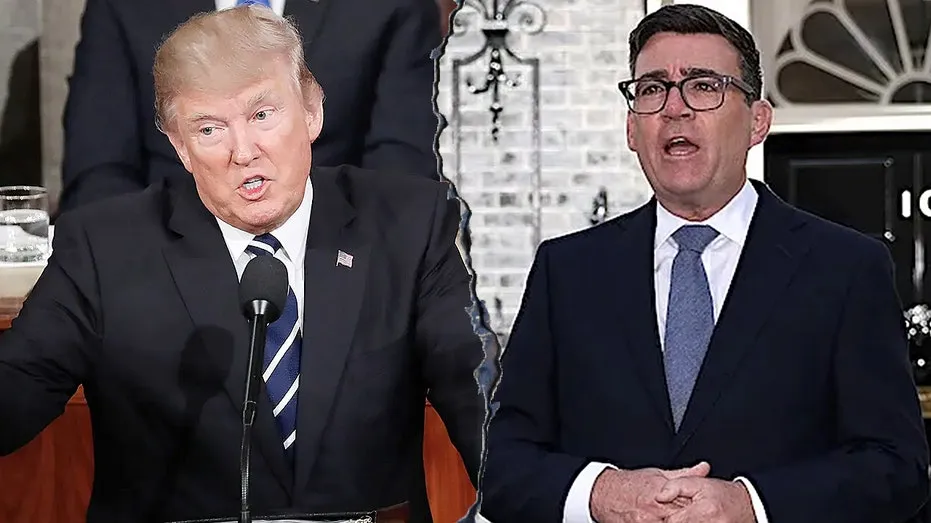
Andy Burnham just picked a fight with Donald Trump’s entire Middle East architecture. The new British prime minister has done what every Labour predecessor warned against — going public on settlement sanctions before Washington could absorb the shock.
What looks like a principled stand on the two-state solution is really a power play against American regional dominance. Burnham thinks the UK can punch above its weight by aligning with European capitals and leveraging trade restrictions. He is not wrong about the moral case. He may be catastrophically wrong about the strategic one.
The official line from Downing Street is sober and measured. Burnham called Trump to discuss the Middle East and stressed the importance of a two-state solution. The readout says nothing about sanctions. That silence is deliberate. Outside sources — Bloomberg among them — suggest the call may have served as advance warning. Whether it was a courtesy briefing or a diplomatic ambush depends on who you ask and what they stand to lose.
The actual measures, expected Tuesday from Foreign Secretary Ed Miliband, go further than most observers predicted. An embargo on goods and certain services tied to West Bank settlements. Not rhetoric. Not a parliamentary resolution. Real trade restrictions with real economic consequences. Miliband has spent weeks preparing the ground, framing the E1 project east of Jerusalem as a red line that threatens the viability of any future Palestinian state. Britain is treating settlement expansion as an existential threat to its own diplomatic credibility.
Behind closed doors in London, the calculus is different. Burnham inherited a government that spent years apologizing for Israel while being accused of tacit antisemitism. His party needs a foreign policy win that demonstrates independence from Washington. Sanctions on settlements deliver exactly that. Domestic audiences see courage. European allies see leadership. American officials see betrayal.
The Israeli response has been immediate and unhinged in the worst possible way. Finance Minister Bezalel Smotrich demanded the British ambassador be expelled, calling Britain a country occupied by radical Islam. National Security Minister Itamar Ben-Gvir suggested Netanyahu recognize Argentine sovereignty over the Falkland Islands and sanction Britain in retaliation. These are not the measured responses of a close ally. They are the reactive rages of a government that sees itself under siege and wants to burn bridges rather than repair them.
Washington’s position is clearer and more dangerous. The State Department said it is tracking plans closely. That is bureaucratic language for we are watching and preparing to respond. Trump has built his entire Middle East strategy on unconditional support for Israel. Any move to penalize Israel economically — even indirectly through settlement goods — challenges the foundation of that relationship. Rep. Randy Fine of Florida already invoked the state’s anti-boycott law, threatening to block British companies from government contracts. This is the kind of legislative nuclear option that turns a diplomatic spat into a trade war.
The European coordination adds another dimension. Canada, France, Germany, and Italy have all condemned the E1 expansion. But condemnation is not the same as sanctions. European governments are wary of unilateral British action that could destabilize the broader alliance. France and Germany will support a two-state solution. They will not necessarily support a trade embargo that alienates Washington. Burnham may have miscalculated how far Europe is willing to follow.
The E1 project itself is the real flashpoint. Located east of Jerusalem, it connects Jerusalem to Ma’ale Adumim, effectively severing any contiguous Palestinian state. Miliband called it a red line. The Israeli government has treated it as an inevitability. Construction has proceeded despite periodic international pressure. Britain is now choosing to escalate from pressure to punishment, which changes the entire nature of the dispute.
What happens next depends on whether Trump views this as a minor diplomatic irritation or a challenge to American hegemony. If it is the former, expect calibrated responses — visa restrictions, intelligence sharing limitations, perhaps some congressional pressure. If it is the latter, the UK could face the full force of American economic retaliation, including secondary sanctions on British financial institutions doing business with Israeli settlement entities.
Burnham’s gamble is real. He is betting that Britain can maintain a functional alliance with Washington while pursuing an independent Middle East policy. History suggests that bet rarely pays off. The special relationship was never meant to be a partnership of equals in every domain. It was always structured around American primacy and British support. Burnham is asking Britain to reverse that arrangement unilaterally.
The settlements will not disappear because of British sanctions. The two-state solution remains fragile regardless. But the damage to Anglo-American relations could be lasting. Every British company facing American legal exposure in Florida, every intelligence sharing channel strained by diplomatic resentment, every European ally cautious about following London’s lead — these are the real costs of this move.
Burnham wanted a foreign policy victory. He may have gotten one. The question is whether it is the kind of victory that strengthens Britain or isolates it.
Author bio: Julian Holbrooke is an overseas international relations analyst who frequently contributes to major European daily newspapers and advises parliamentary committees on Middle East policy.